
Date
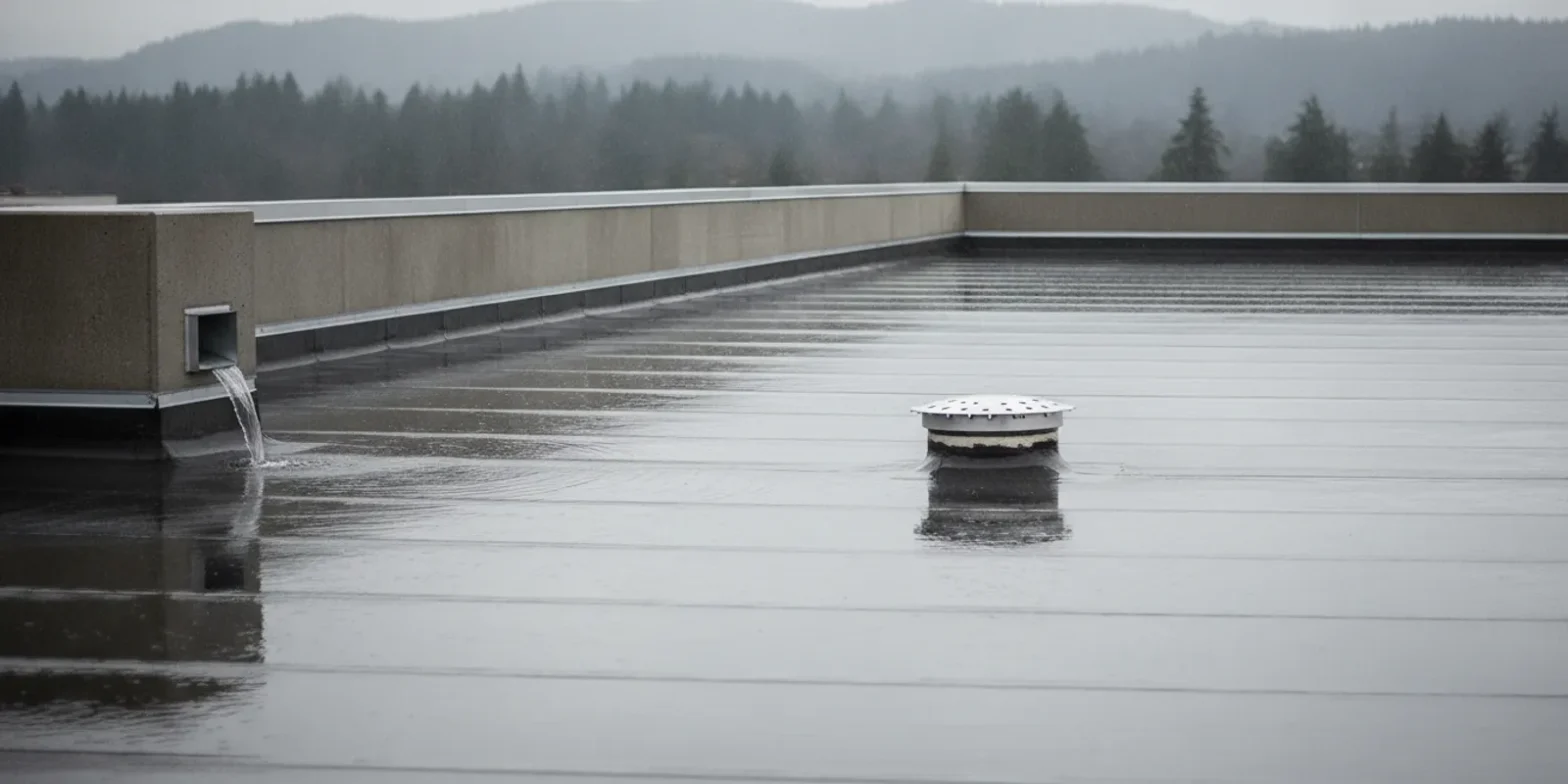
Wed Oct 7Commercial roof drainage in Washington depends on more than the roof drain itself. The roof surface, slope, drains, scuppers, and overflow routes must work together to move rainwater away without leaving persistent ponding or sending water into the building. Property owners and managers can use this guide to understand the main parts of a drainage system and plan practical inspections.
Request a commercial roof assessment
Why does drainage matter on a commercial roof?
Water that cannot leave a roof efficiently can collect around drains, seams, rooftop equipment, and low points. Standing water can add weight and keep roof materials wet for longer. Leaks may show up far from the original drainage problem, so a ceiling stain alone does not identify the cause.
Washington properties face recurring rain, and local conditions vary by site. Leaves, needles, windblown debris, and seasonal storms can obstruct a drain or outlet. A system that worked during dry weather may not perform the same way after debris accumulates or a component shifts.
Drainage should be considered as part of the full roofing assembly. If a roof is being repaired or replaced, ask how its slopes and outlets will direct water, and where overflow will go. Landmark’s roofing services include commercial work; the appropriate system depends on the building and project scope.
A drainage concern also affects how a property team prioritizes other maintenance. Water at a roof edge, for example, may point to a blocked scupper, a problem with the downspout, or an issue farther along the discharge route. Water remaining around a roof drain could instead involve debris, the drain assembly, the connected piping, or the surrounding roof slope. Treat the visible water as a clue to investigate, not proof of a single cause.
How do roof slopes move water toward an outlet?
A roof needs a path that guides water toward a drain or edge. That path may come from the structure itself or from tapered components installed above the roof deck. Roof plans and a field inspection can help show whether the surface directs water as intended.
Look for low spots where water remains after surrounding areas have dried. A small amount of temporary moisture immediately after rain is different from persistent ponding. Note the location and approximate size of any standing water, but do not walk on a roof unless you are trained and authorized to do so.
Drain locations matter, too. Rooftop equipment, curbs, and other obstructions can alter how water travels. A qualified roofing professional can evaluate whether the current layout, roof surface, and outlet positions are working together. For low-slope systems, Landmark also provides single-ply roofing information; the page is a starting point for discussing system options, not a substitute for a site-specific design.
When reviewing a roof plan or walking through observations with a contractor, ask where the high and low areas are and how water moves between them. A plan that marks drains but not the flow paths can leave important details unclear. For example, a rooftop unit or curb can interrupt a route toward an outlet. The solution may involve clearing a blockage, correcting a local obstruction, or considering a broader slope or layout issue. Those possibilities require inspection; a diagram alone cannot confirm the roof’s current condition.
What is the difference between drains, scuppers, and overflow outlets?
Commercial roofs use different outlet types. Some systems combine more than one, and the best arrangement depends on the roof geometry, parapets, and drainage plan.
| Component | Typical location | What it does | What to check |
|---|---|---|---|
| Primary roof drain | At a low point in the roof | Collects water and carries it into a connected drain line | Debris, secure grate or strainer, signs of slow drainage, and nearby ponding |
| Scupper | Through a parapet wall or at a roof edge | Provides an opening for water to flow out of the roof area | Blocked opening, loose or damaged flashing, and the condition of the discharge area |
| Overflow outlet or secondary drain | At a separate opening or designated higher level | Provides a backup route if the primary drainage path is overwhelmed or blocked | Clear opening, visible discharge path, and any evidence it has activated |
| Downspout or drain leader | Below an edge outlet or connected drain | Directs discharged water away from the roof and building | Loose connections, blockage, leakage, and water collecting near the foundation |
The table describes common functions, not a universal layout. A roof may have internal drains, edge drainage, or a combination. The EPDM Roofing Association article on low-slope roof codes identifies primary and overflow drainage capacity among code considerations for commercial roofs. Confirm the requirements for the specific project with the local building authority and the design professional.
Follow the water beyond the roof outlet. An exterior downspout that ends beside a wall may move water off the roof but still leave a property-level drainage concern. Note whether the outlet is connected to a designated system, where it discharges, and whether water visibly backs up or spills at a joint. Do not assume that a roof drain line and a site drain are connected in a particular way. Building plans and a qualified review can clarify the intended route.
What should you map before choosing a drainage fix?
A clear inventory prevents a maintenance discussion from focusing on one grate while overlooking the larger route. Start with available roof plans, past repair records, and any notes about recurring leaks. Mark each primary drain, scupper, overflow opening, downspout, and visible discharge point. Add major rooftop equipment, parapets, and places where water has been observed standing.
Keep observations factual. Record the date, recent weather, approximate location, and whether the water was seen during rainfall or later. A photo from a safe, approved vantage point can help identify the area on a plan. Avoid estimating roof slope or drainage capacity yourself. Those are design and inspection questions for qualified professionals.
Then compare the record with what happens after rain. If a recurring wet area sits between a roof feature and the nearest outlet, note both locations instead of labeling the area as a drain failure. If a downspout leaks at a joint, record the joint and any water collecting below it. This simple map helps a roofer trace the path from roof surface to outlet and discharge point before proposing a repair.
How should a Washington property manager inspect roof drainage?
Inspections are most useful when they are consistent. A basic ground-level review can identify visible discharge issues, while roof access and close examination should be left to qualified personnel following the building’s safety procedures.
- Review the drainage plan. Locate primary drains, scuppers, overflow outlets, and downspouts. If drawings are available, keep them with maintenance records.
- Check accessible outlets. Look for leaves, needles, sediment, or other debris at drain grates and scupper openings. Do not remove a cover or enter a drain line unless authorized and competent to do so.
- Observe after rain. From a safe location, note whether water exits at the expected points and whether any interior leaks or unusual discharge appear.
- Record persistent ponding. Photograph the location from an approved vantage point and record how long water remains after rainfall ends. Compare observations over time.
- Look for related warning signs. Note water stains, peeling finishes, musty odors, ceiling damage, or recurring leaks near roof penetrations and perimeter walls.
- Arrange a professional review. Ask the roofer to inspect drainage components, roof condition, and the route water takes after it leaves the building.
Do not treat an overflow opening as an ordinary drain to plug or seal. It may be an important backup route. If water is entering the building, protect people and equipment, document the affected area, and contact a qualified roofing professional promptly.
Use a consistent form or log so staff can compare observations from one visit to the next. Include the specific outlet, the condition of its strainer or opening, any visible debris, and whether water appears to move freely. If the inspection is ground-level only, state that clearly; it is not a substitute for examining rooftop components. When a contractor visits, give them the log and point out repeat locations rather than relying on memory.
How can observations during and after rain help?
Timing can help narrow down where to investigate. If safe observation is possible, note whether water exits a scupper during rainfall, whether an overflow outlet shows signs of use, and whether water is spilling from a downspout connection. Do not stand below a discharge point or enter a restricted area to watch it.
After the rain stops, record the time and return for a later ground-level check only if conditions and access rules allow. Compare the wet areas with the roof plan and previous records. A recurring wet spot in the same location may merit closer evaluation; a one-time observation after a heavy shower does not establish a defect by itself. If water remains, leaks appear, or an outlet behaves differently from previous observations, share those details with a qualified roofing professional.
Separate what you saw from what you suspect. “Water was still visible near the northwest drain the following morning” is more useful than “the roof is sloped wrong.” A measured description gives the professional a starting point without prematurely assigning a cause. Where an interior leak is involved, record the room, ceiling area, and whether the stain changes after rain. The source may be some distance from the visible interior damage.
What should you know about overflow paths and Washington code?
An overflow route is intended to reduce the risk of water accumulating when the main route cannot keep up or becomes obstructed. Its usefulness depends on a clear outlet and a discharge path that can be recognized and maintained. If the primary and overflow outlets look identical from the ground, ask the building’s roofing professional to identify each one.
Code requirements can depend on the adopted code edition, building conditions, and the project. A Washington provision in WAC 51-56-1100 includes a requirement concerning the height of secondary roof drains above the roof surface. Do not use one code excerpt to set a design for every commercial building. Have the project team confirm which adopted provisions apply with the relevant Washington jurisdiction.
For a roof replacement or drainage change, request clear answers about the proposed primary outlets, overflow route, and how water will discharge away from the structure. Keep those details with project documents. Landmark’s roofing and exterior FAQs can help with general questions, while a site assessment is needed to evaluate a particular roof.
Ask the design or roofing professional to identify the applicable code edition and jurisdiction during project planning. Confirm whether the work changes roof drainage, outlet locations, or discharge routing, and whether permits or plan review apply. A cited rule can be a useful prompt for questions, but its meaning depends on the code adopted for the project and the building’s circumstances. Keep the final design notes and any approvals with the property’s maintenance records.
How often should commercial roof drains and scuppers be maintained?
Use a schedule that reflects the building’s surroundings, roof access rules, and observed debris load. A property surrounded by trees may need more frequent checks than a more exposed site. Include a review after significant wind or rainfall when safe and practical, and follow the system manufacturer’s maintenance guidance.
Maintenance should include clearing accessible debris, checking that drain strainers and scupper openings remain in place and unobstructed, and recording any damage or recurring ponding. Do not push debris into a drain or use chemicals, tools, or pressure that could damage roofing or flashing. Ask a roofing professional to handle repairs and any work that requires roof access.
Keep a simple log with inspection dates, weather observations, photos, debris removal, leaks, and completed repairs. This record makes recurring trouble easier to spot and gives contractors useful context. Landmark’s Puget Sound roof maintenance guide provides related maintenance guidance, and the Commercial Property Inspectors Association guide to built-in drains explains drain components and common inspection concerns.
A useful seasonal routine can be simple. Before a period of frequent rain, check that the responsible staff know where the primary and overflow outlets are and how to report a blockage. After leaf fall or strong winds, arrange an appropriate debris check under the property’s roof-access and safety rules. Following a major weather event, look for new interior water marks and unusual discharge from accessible ground-level locations. These checks do not replace a professional roof inspection; they help teams notice a change sooner and provide a clearer maintenance history.
When an inspection finds a concern, give it an owner and next step. A blocked accessible opening may call for prompt clearing by an authorized person; a damaged outlet, recurring ponding, or active leak deserves professional evaluation. Record what was done and whether the next observation showed improvement. If the same condition returns, include the earlier dates and repairs when requesting a review. That history can help distinguish a recurring underlying issue from a one-time obstruction.
When is a drainage problem a repair issue or a larger project?
A blocked outlet or damaged strainer may be a maintenance item, but recurring ponding or leaks call for a broader assessment. The cause could involve the drain, the surrounding roof surface, flashing, a connected line, or the route water takes after leaving the roof. Replacing a visible component without identifying the cause may not resolve the problem.
Ask the roofing professional to explain the observed condition, likely source, recommended repair, and whether the issue appears in other areas. If a roof replacement is already under consideration, discuss drainage improvements as part of the project scope rather than treating them as an afterthought. Review a contractor’s written proposal and the work included before approving repairs.
For a focused repair, ask what will be changed and how the contractor will confirm the water route is clear afterward. If the proposal addresses only a drain cover but the records show repeated ponding nearby, ask whether the roof surface and connected drain path were also evaluated. For a larger project, request that drawings or scope notes identify outlet locations, overflow provisions, and discharge destinations. These questions help compare proposals on the work included rather than on a short description alone.
Schedule a commercial roof assessment
Frequently Asked Questions
Should every commercial roof have both primary and overflow drainage?
Drainage needs depend on the building, roof design, and applicable code. Ask a qualified design professional or roofing contractor to review the roof plan and confirm whether secondary drainage is required and how it should be arranged.
Is water on a flat roof always a sign of failure?
Not necessarily. The timing, depth, location, and persistence of water matter. Recurring or long-lasting ponding should be documented and reviewed by a roofing professional, especially if there are leaks or visible changes to the roof.
Can building staff clean commercial roof drains?
Only if they are authorized, trained, and equipped to follow the building’s roof-access and fall-protection procedures. Otherwise, use a qualified service provider. Never block an overflow outlet or enter a drain line as a routine cleaning step.
What information helps during a drainage assessment?
Share roof plans if available, the locations and dates of leaks or ponding, photos taken from safe locations, past repair records, and any known drain or overflow locations. This helps the professional focus the inspection.
A clear drainage plan, safe inspections, and timely maintenance help property managers address small warning signs before they become harder to diagnose. For a specific Washington commercial roof, base decisions on its condition, design, and applicable local requirements.