
Date
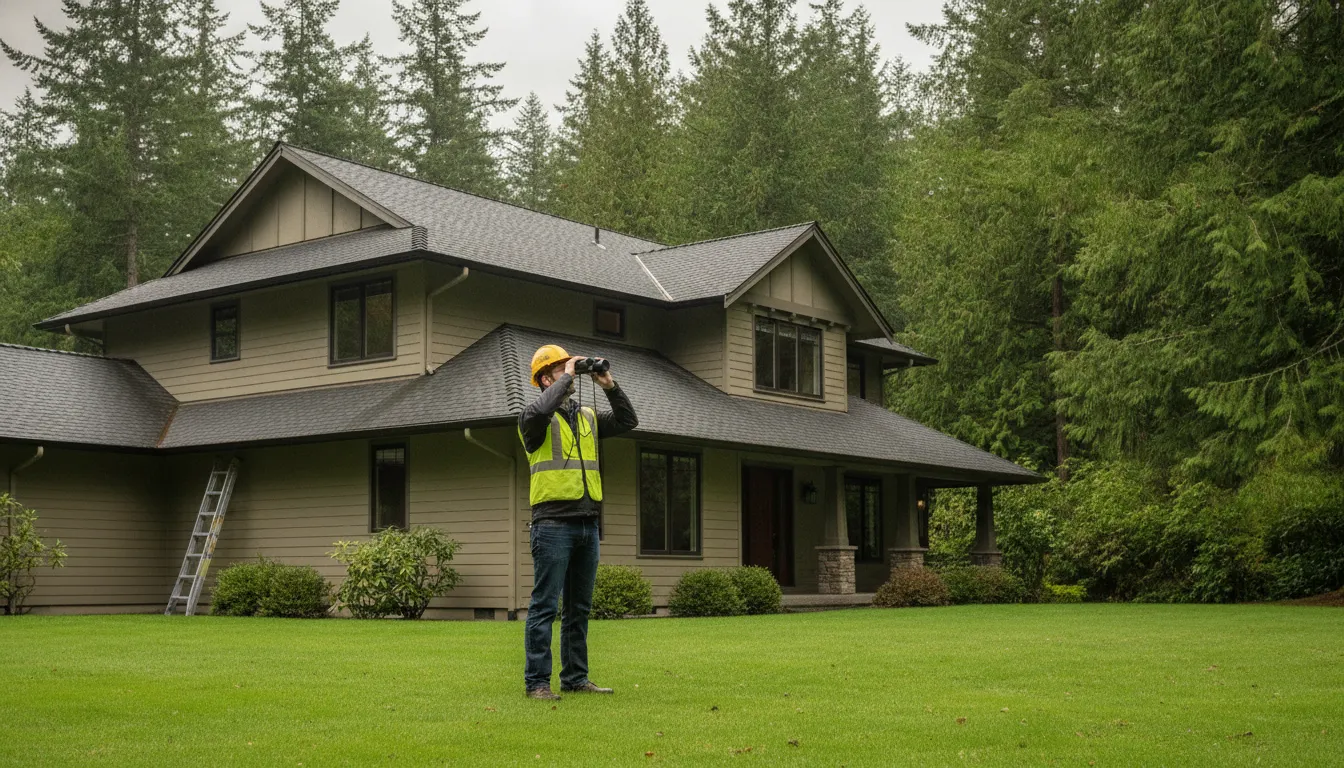
Tue Sep 29Rain, shade, falling needles, and clogged drainage can turn small roof concerns into interior water damage in Puget Sound homes. A practical maintenance routine starts from the ground: look for visible moss or debris. Check gutters and downspouts, and note stains or dampness in the attic or upper rooms. Do not climb onto the roof if you are unsure about your footing or the condition of the surface.
Request a residential roof inspection if a warning sign is visible or the roof has areas that are difficult to evaluate safely.
Good roof maintenance combines safe homeowner observation with timely professional evaluation. Keep drainage paths clear, watch for moss and surface wear, review the roof after significant weather, and arrange an inspection when you see leaks, damaged materials, or changes you cannot confidently assess.
Use this checklist during routine reviews.
What Does Roof Maintenance Include?
Roof maintenance is a practical review of the parts that keep water outside your home. It includes safe, ground-level observation of the roof surface, drainage system, visible flashing, and areas where equipment or vents pass through the roof. It also means noticing signs inside the home, such as dampness, staining, a musty mildew smell, or soft wood, which can indicate water damage.
From the ground, look for damaged, loose, or missing roofing materials, visible debris, sagging areas, and gutters that overflow during rain. Do not climb onto the roof to investigate a concern. A roof-level review may be needed for flashing around vents, skylights, chimneys, valleys, and other penetrations, but those areas are best assessed by a qualified professional.
What should a professional inspection cover?
A professional review connects visible roof conditions with possible moisture entry points, including surface wear, flashing, drainage, penetrations, structure, and attic ventilation.
Use this professional roof inspection checkpoints guide to understand what a closer evaluation covers. Routine observation can help you spot a developing issue. But it does not replace a professional inspection when you see damage, water intrusion, or conditions you cannot safely assess.
How Often Should You Check a Roof in Puget Sound?
There is no single roof maintenance schedule that fits every home in Puget Sound. Roof age, nearby trees, roof design, visible moss or debris, and recent weather all affect how closely you should watch its condition. A practical approach is to make ground-level observations part of your seasonal home care, then look again after significant wind or rain.
Before fall rains arrive, look for leaf litter, conifer needles, and other debris collecting on roof surfaces, especially below overhanging branches. Clear this material before fall rains because debris can support moss and lichen growth. Trees can also shade the roof and slow drying between rainfalls, while falling branches and needles may trap water on the surface.
Gutters deserve the same seasonal attention. Check from a safe position for visible overflow, sagging, or plant material, and confirm that downspouts are not obviously blocked. Clean gutters help prevent backups from reaching the lowest roof course. Do not treat a ground-level check as a substitute for a roof inspection, especially if you cannot see valleys, flashing, vents, or other roof details safely.
After a major weather event, scan for displaced materials, fallen branches, new staining, or water intrusion indoors. If you notice a change, arrange a professional assessment rather than climbing onto a wet or steep roof. Seasonal and post-weather observations help Washington homeowners catch problems earlier.
How Can You Prevent Moss and Drainage Problems?
Moisture and shade make moss a recurring concern for Puget Sound homes. Nearby trees can slow drying between rainfalls, while falling branches and needles can collect on the roof and trap water. Moss can also hold soil and debris against roofing materials. On asphalt-shingle roofs, moss can lift shingle edges and hold moisture against the surface. Metal roofing requires material-specific care, so follow manufacturer guidance or ask a professional before using a treatment. The goal is not to treat every spot aggressively. It is to reduce moisture buildup and address growth without damaging the roof.
- Reduce persistent shade where practical. Have overhanging branches evaluated and trimmed when they block sunlight or drop debris onto the roof. Tree work should be handled from a safe position on the ground or by a qualified professional. Trimming nearby trees can help more sunlight reach the roof.
- Keep roof surfaces clear without climbing onto the roof. From the ground, look for visible leaf litter, conifer needles, and branch debris. Clear accessible debris safely, or arrange a professional cleaning before seasonal rains. Do not walk on a mossy or wet roof, and do not use pressure washing as a routine solution. Improper pressure-washing technique can damage shingles.
- Use caution with moss treatment. If treatment is appropriate, follow the product label and confirm that it suits the roof material and nearby surfaces. Some moss-control products can harm surrounding plants, and zinc sulfate can corrode copper gutters, downspouts, or flashing. A professional can select a safer approach when the roof, landscaping, or drainage system creates complications. See this guide on how to prevent moss growth on your roof.
- Keep runoff paths open. Gutters filled with debris can back water up to the lowest roof course. Check from the ground for sagging gutters, overflowing during rain, or downspouts that discharge against the home. Use this guide to keep gutters clear for roof drainage, and hire help when cleaning requires roof access or ladder work.
If moss lifts materials, drainage remains poor, or water intrusion appears, schedule an assessment.
Which Roof Problems Need Professional Help?
Some roof concerns are easy to spot from the ground, but their source may be hidden beneath shingles, flashing, or another roof penetration. Contact a qualified roofing professional when you notice missing, loose, or visibly damaged roofing materials, displaced flashing, or a gutter that repeatedly overflows. These conditions can allow moisture to enter the home and worsen if the underlying cause is not addressed.
Interior evidence deserves prompt attention as well. Damp areas, ceiling or wall staining, a musty mildew smell, and soft wood can indicate water damage. Investigate the source of moisture and repair or replace the building components that allowed intrusion. A surface stain may not appear directly below the entry point, so guessing at the source can leave the leak unresolved.
Professional help is also appropriate when you see damage around vents, skylights, chimneys, valleys, or other penetrations, or when a roof has punctures, ponding water, seam problems, or widespread shingle issues. Avoid climbing onto a roof to investigate these areas. A ground-level observation, photographs from a safe location, and a residential inspection provide a better starting point.
Landmark Roofing & Siding provides residential inspections and can evaluate leak repair, flashing, missing or warped shingles, moss and algae treatment, and storm-related damage in Washington’s Puget Sound area. Review these signs your roof may need repair before deciding whether a professional assessment is warranted.
What Should You Do After a Storm?
After strong wind or heavy rain, look around the home from the ground. Do not climb onto a wet roof or use a ladder. Check for missing or damaged shingles, loose flashing, branches, debris, and new dampness or staining indoors.
Keep people away from fallen materials or electrical hazards. If water is actively leaking indoors, place a container under the drip when safe and move belongings away. Do not disturb damaged roofing.
Request a professional roof assessment when you see visible roof damage, new water intrusion, displaced flashing, blocked drainage, or signs that a branch struck the roof. A trained inspector can evaluate areas that are not visible from the ground, identify the likely source of moisture, and document needed repairs. Contact a qualified roofing professional when maintenance assistance is needed.
A Simple Roof Maintenance Checklist
A safe roof maintenance review starts from the ground and inside the home. Look for visible changes, drainage problems, and signs of moisture. Do not climb onto the roof to complete a routine check. A professional can evaluate roof-level components that are not safely visible from the ground.
| Maintenance focus | Safe homeowner observation | Professional trigger |
|---|---|---|
| Roof surface | From the ground, look for visible damaged, loose, or missing shingles and unusual debris. | Any missing or loose roofing material, suspected physical damage, or areas that cannot be viewed safely. |
| Flashing and penetrations | Check from a safe location around visible vents, skylights, chimneys, and roof edges for changes or gaps. | Suspected loose or missing flashing, concerns around roof penetrations, or a leak near one of these features. |
| Gutters and drainage | Watch for overflowing gutters, blocked downspouts, standing water, or water collecting near the home. | Clogged or overflowing gutters, recurring drainage problems, or water backup that may reach the roof edge. |
| Interior moisture | Look in accessible attic or upper-room areas for dampness, staining, musty mildew odor, or soft wood. | Any water-damage sign. The source should be investigated and the material allowing moisture intrusion repaired. |
These observations help you document changes, but they do not replace a detailed inspection. In Washington’s wet Puget Sound climate, request professional help when you see a leak, damage, or a condition you cannot assess safely.
Ready to Schedule a Residential Roof Inspection?
If you have noticed roof wear, moss, drainage trouble, leaks, or storm-related concerns, request a residential roof inspection from Landmark Roofing & Siding. A professional assessment can help clarify what needs attention and provide a practical next step for protecting your home.
Frequently Asked Questions
What maintenance should be done on a roof?
Check from the ground for loose materials, flashing damage, moss, debris, sagging, and interior water stains. Keep gutters clear and arrange a professional inspection for areas that are unsafe to reach.
How often should you check a roof in Puget Sound?
Check before fall rains, after significant wind or storms, and whenever you notice a leak, stain, loose material, or unusual debris. Arrange a professional inspection when a concern appears.
What can I put on my roof to make it last longer?
Focus on prevention: keep debris and moss from trapping moisture, maintain clear gutters, and reduce heavy shade. Do not pressure-wash or apply treatment without confirming that it suits the roof and drainage components.
Which roof problems need professional help?
Request an assessment for leaks, missing or loose materials, damaged flashing, overflowing gutters, sagging, exposed penetrations, storm damage, or moss you cannot safely address. Avoid climbing onto a wet or steep roof.