
Date
Mon Nov 2Choosing pro roofers is about more than finding someone to install new materials. Washington homeowners should expect a clear assessment, a written scope, careful work practices, and useful documentation at the end. Understanding each stage helps you ask focused questions and compare proposals on the work they actually include.
Request a roofing project conversation
What should pro roofers inspect before recommending work?
A useful assessment begins with the roof’s condition and the homeowner’s concern. A roof may have an isolated leak, widespread aging, damaged edges, or signs of moisture indoors. These observations do not all call for the same work. Ask the contractor to explain what was observed and how the findings support repair or replacement.
The review should consider accessible roof areas and details around penetrations, valleys, flashing, drainage, and edges. Interior signs such as ceiling stains can help guide investigation, but a stain alone does not prove the exact source. Tell the contractor when the concern first appeared, whether it changes with weather, and what prior work or leak history you know about.
Ask which areas could not be inspected safely or directly. Some concealed conditions become visible only after existing materials are removed. A professional should separate confirmed observations from possibilities and explain how newly discovered damage would be documented and approved before extra work proceeds.
Prepare a short list before the visit. Include the rooms or roof areas where you noticed a problem, approximate dates, weather conditions, and any temporary measures already taken. Photos from the ground or indoors may help show how a condition changed, but do not climb onto a roof to take them. This simple record gives the assessor context and helps avoid relying on memory during a technical conversation.
How should the project scope be explained?
A written proposal should identify the work included, the materials specified, and conditions that could change the plan. Look for details such as removal of existing roofing, underlayment, flashing, ventilation components if included, and treatment of roof penetrations. Scope depends on the house and selected system; do not assume every quote includes the same work.
The document should clarify whether disposal, permits, and protection of nearby areas are included or handled separately. It should state how the contractor will communicate unexpected concealed damage and obtain approval for a change. If a proposal says only “complete roof,” ask for a specific description of what will be removed, installed, and inspected.
| Proposal area | What a clear document explains | Question to ask |
|---|---|---|
| Inspection findings | Observed concerns and areas not verified | Which findings support this recommendation? |
| Materials and scope | Specified system and included components | What is excluded or optional? |
| Site protection | Access, landscaping, and debris plan | How will the work area be managed? |
| Changes | Documentation and approval process for concealed conditions | Will you explain costs and wait for approval? |
| Closeout | Cleanup, final review, and records | What documents will I receive? |
Compare proposals by scope, not only by total. A lower figure may reflect different materials, exclusions, or assumptions; a higher figure is not automatically more complete. Ask each bidder the same questions and request written answers. The guide to what a roof change estimate should include offers more detail on reviewing a proposal.
For example, one quote may include removal of all existing roofing and replacement of flashing, while another may assume some components can remain. Those are not equivalent scopes. Ask what condition would lead to a change, how the crew would show that condition, and whether the revised amount requires your written authorization. If one contractor uses an allowance or provisional amount, ask what it covers and how the final amount is determined.
What should homeowners clarify about materials?
Ask for the exact product or system being proposed, including relevant component choices. “Shingles” or “metal roofing” can describe a broad category rather than a complete specification. The proposal should identify the chosen material and compatible components included in the work.
Discuss appearance, roof pitch, existing structure, ventilation, and exposure to weather where relevant. A contractor should explain tradeoffs in plain language without promising that one material solves every concern. Product performance and warranty terms vary by manufacturer and product, so use the product documentation for specific claims.
Ask how the material selection relates to the house’s shape and details. A roof with several valleys, dormers, skylights, or intersecting planes may involve more transitions than a simple roof. Those details do not by themselves determine which product is appropriate, but they affect how the scope should describe flashing and other transitions. Landmark provides residential roofing services in the Puget Sound area; review its residential roofing information and ask how a proposed system fits your home. If asphalt shingles are under consideration, see the company’s composition roofing information.
Before choosing, write down the questions that matter to your household: appearance, expected maintenance, product documentation, and any concerns about the existing roof. Ask the contractor to distinguish manufacturer statements from project-specific recommendations. If a sales explanation includes a performance or service-life promise, request the published product terms that support it and check that the exact product named in the proposal matches those terms.
What happens before installation begins?
Confirm the anticipated schedule, access needs, and where vehicles or materials may be placed. Ask whether outdoor furniture, fragile items, or vehicles should be moved. The contractor should explain how the work area will be managed and how updates will be shared if weather or an unexpected condition affects the plan.
Roof replacement can involve noise, movement around the home, and temporary disruption. Discuss pets, children, gates, and access restrictions in advance. Identify the project contact and the best way to reach that person. A clear communication plan is more useful than an informal promise that someone will be available.
Use a short pre-start checklist to confirm details while there is still time to resolve confusion:
- Confirm the planned start window and how weather delays will be communicated.
- Ask where the crew will park, stage materials, and place waste containers, if used.
- Move or protect items the contractor identifies as vulnerable to dust, vibration, or falling debris.
- Make sure the project contact knows about gates, access limits, and household schedules.
- Keep the signed proposal and approved changes available for reference.
Ask what the household should expect during active work. The response should be practical: where people may walk, which access points may be affected, and whom to contact if something changes. Do not assume that a normal daily routine will be unaffected. Planning for noise and access in advance can reduce avoidable interruptions.
What should professional roofers do during installation?
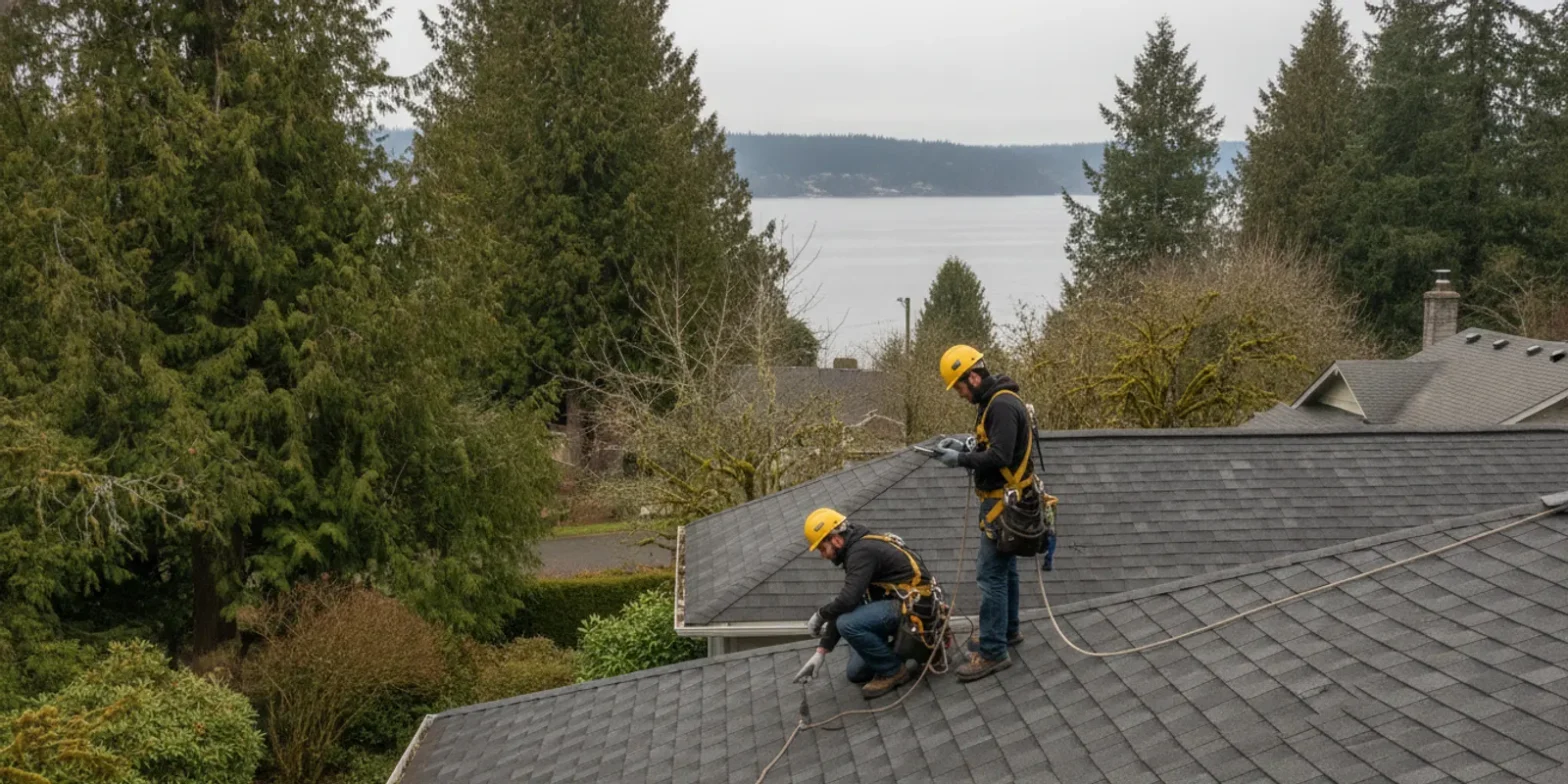
The crew should follow the agreed scope and use appropriate safety practices. Homeowners generally should not enter an active work area or climb onto the roof to check progress. Instead, request updates from the project contact and ask for photos or a walkthrough when safe and practical.
Some underlying conditions are not visible until old materials are removed. If the crew finds deterioration or other concealed damage, ask for a description and documentation of the issue, the proposed correction, and any cost or schedule impact. Use the agreed change process so you understand and approve revisions before additional work proceeds, rather than seeing them for the first time on a final invoice.
Roofing works as a system, so transitions, edges, penetrations, and drainage deserve attention in the scope. Ask how the proposal addresses them and what product-specific installation instructions apply. For general help assessing contractors, Consumer’s Checkbook explains its roofer rating and comparison approach. Treat such a reference as one input, alongside written terms, relevant credentials, and direct answers about the project.
Homeowners can follow progress without interrupting the crew. Agree in advance on how often updates will arrive and what they will cover. A useful update might say which phase is complete, whether the work remains within the agreed scope, and whether a decision is needed from you. If photographs are offered, ask that they be taken from safe positions and labeled or explained so you can tell which roof area they show.
When a change is proposed, pause to check three things: what condition prompted it, what work is proposed, and how the change affects the schedule or price. Keep the explanation with your project documents. This does not require you to diagnose the roof yourself; it gives you a clear record of the basis for approving or declining the added scope.
How should cleanup and final review work?
Before work starts, ask what cleanup includes and how debris will be managed. At completion, the contractor should address job waste covered by the proposal and review the work area with you. Ask how the crew checks for loose debris around the house and confirms that equipment and materials have been removed.
Review the completed scope against the proposal. Ask about deviations, remaining items, or care instructions. If you notice a concern, document it and contact the project representative promptly. Keep the proposal, approved changes, invoices, product information, and completion records together.
A final conversation is a practical time to confirm what was done and what remains your responsibility. Ask who to contact if a question comes up later, whether any follow-up is planned, and how to report a concern. If an item cannot be reviewed safely from the ground, ask the contractor to explain how it was checked instead of attempting to inspect it yourself.
Make a simple closeout folder, digital or paper, with the signed scope, changes, payment records, product details, warranty documents, and dated completion notes. Include photographs or correspondence that clarify an approved change. A tidy record helps you answer future questions about which system was installed and what work was included.
What warranty documents should you receive?
“Warranty included” is not enough detail to understand coverage. Ask which warranty applies to workmanship and which applies to materials, who provides each one, what conditions or exclusions apply, and how to make a claim. Confirm the start date, any transfer rules, and whether registration or other steps are needed. Do not assume a manufacturer warranty covers installation workmanship.
Get applicable terms in writing. If a contractor describes a warranty as a benefit, ask for the document and read its limits. Landmark publishes information about its warranty coverage; the written terms are the place to verify details relevant to a project.
Keep the warranty papers beside the final invoice and product information. Note any deadline for registration or required maintenance stated in the documents, and save proof of any steps you complete. If the property is later sold, the documents can help a new owner understand what coverage may apply, but transfer eligibility depends on the actual terms. Check those terms rather than relying on a verbal summary.
How can you compare proposals without guessing?
Use the same comparison questions for each contractor. This makes differences visible and helps you identify gaps that are easy to overlook when proposals use different formats. You can copy the checklist below into your notes and record the answer beside each proposal.
- What was inspected? Record roof areas reviewed, interior observations, and anything inaccessible.
- What exact work is included? Note removal, installation, flashing, ventilation items, disposal, and other components rather than relying on a broad label.
- What materials are specified? Capture product names and components so the proposals can be compared accurately.
- What is excluded? List permits, site protection, repairs to concealed conditions, and any optional items that are not included.
- How are changes approved? Confirm the evidence, written explanation, cost and timing details, and approval step.
- How will the work area be managed? Compare access, protection, cleanup, and communication plans.
- What records will be delivered? Ask for completion documentation and separate workmanship and manufacturer warranty terms.
Imagine two proposals that appear similar at first glance. Proposal A specifies the roofing system and explains how concealed damage will be documented, but leaves disposal unclear. Proposal B lists disposal and cleanup but describes materials broadly. Neither is ready for a fair comparison until you ask the missing questions. Record the written answers, then compare the full scope and assumptions rather than inferring what the contractor intended.
Keep the process focused on fit and clarity. A proposal is not stronger simply because it is longer, and a short proposal is not necessarily inadequate if it clearly covers the project. The useful test is whether you can explain what the crew will do, what might alter the plan, how approval works, and what records you will receive when the work is complete.
Homeowners in Redmond, Bellevue, Kirkland, Seattle, and other Puget Sound communities can review Landmark’s service area information and roofing and exterior project gallery as they prepare questions about a replacement. These pages can provide company-specific context; your own written proposal remains the basis for understanding the work offered for your home.
Frequently asked questions
Should a roofer inspect the attic?
An attic review can help when the space is safely accessible and relevant to the concern. Ask whether the assessment includes an interior or attic review and which areas could not be checked. A visual review cannot always identify every concealed condition.
Can a contractor promise that no hidden damage will be found?
Conditions beneath roofing materials may remain concealed during an initial assessment. Ask how newly discovered conditions will be described, documented, priced, and approved before additional work proceeds.
How can I compare two roofing proposals?
Compare materials, removal and installation scope, exclusions, site protection, change process, schedule assumptions, cleanup, and warranty documents. Ask each contractor to answer the same questions in writing.
What documents should I keep after replacement?
Keep the signed proposal, approved changes, payment records, product details, warranty terms, and completion notes together. These documents help you understand what was installed and whom to contact if a question arises.
What if rain is forecast during the project?
Ask the contractor how weather affects the schedule and how exposed areas will be managed during work. The specific plan depends on the project and conditions. Confirm who will communicate a delay or a change to the planned work window.
A well-defined roofing project gives you a clear record of what was inspected, what work was approved, and what documentation to keep after completion. Use those details to make an informed decision for your Washington home.