
Date
Mon Nov 23A clear roof replacement quote starts with an inspection and a defined scope, not a guess based on a few details from the street. If you plan to get a roof replacement quote, knowing what the inspection and written proposal should cover helps you compare materials, work, timing, and costs with confidence.
Call to request a free roof inspection
What happens during a roof replacement inspection?
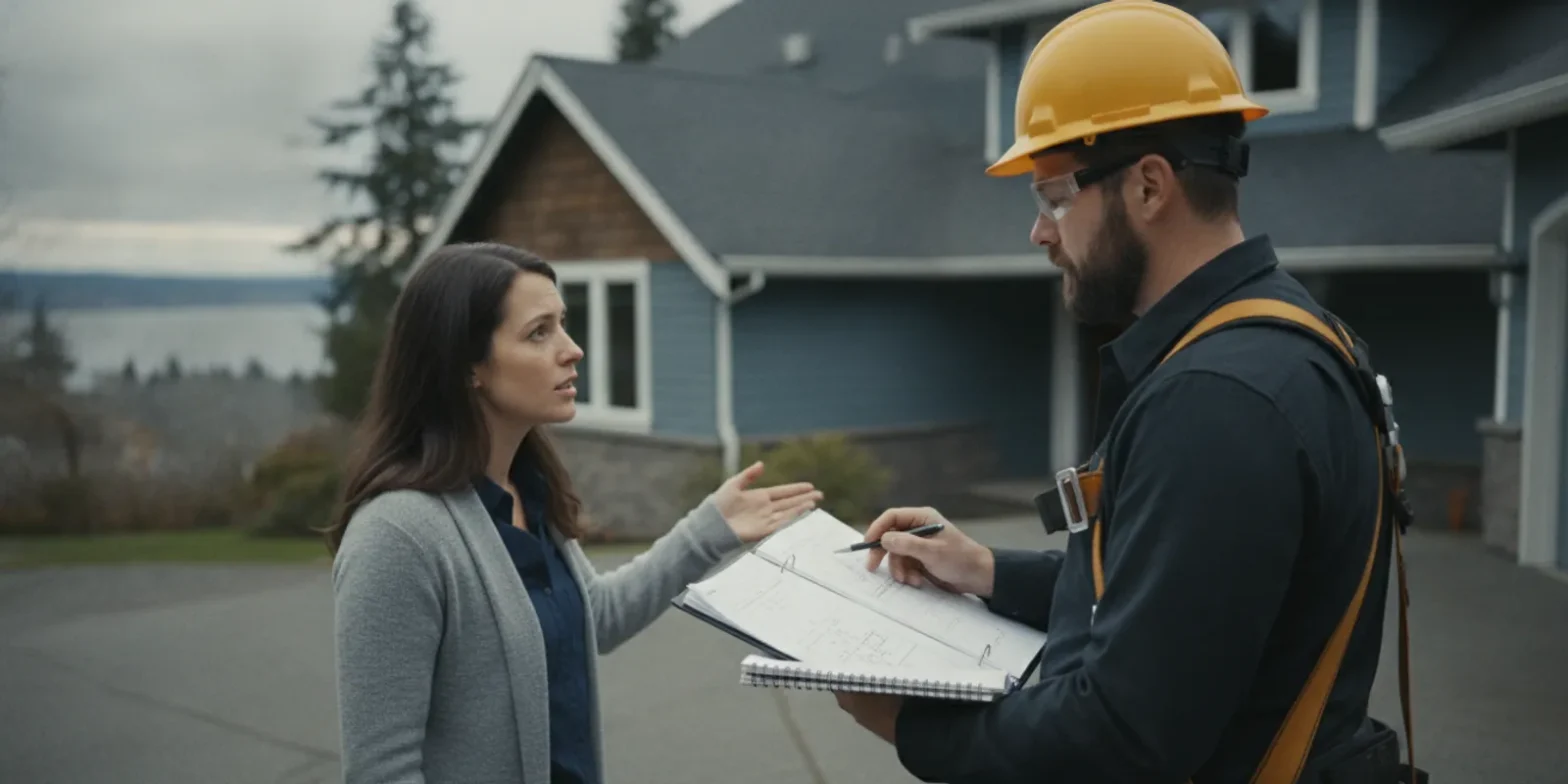
An on-site inspection helps establish the roof’s visible condition and the work it may need. Landmark Roofing & Siding offers a free on-site inspection and detailed proposal for residential roof replacement. No article or preliminary estimate can identify the specific conditions on an individual home; those findings require an assessment.
A comprehensive inspection can review surface wear, active or past leak signs, flashing, moss and debris, drainage, roof penetrations and vents, structural soundness, and attic ventilation. These parts connect. Worn roofing material is one concern, while damaged flashing or drainage problems may also affect the recommended work. Ask the inspector to explain which observations support each part of the scope.
Prepare a short record before the appointment. Note where you have seen water or staining, when it appeared, and whether the condition changes after rain. Share the dates and scope of earlier repairs if you know them. You do not need to diagnose the cause or climb onto the roof. Clear observations help direct attention without turning your guess into a conclusion.
It is reasonable to ask how the inspection will be documented. The proposal should connect findings to the recommended work, while distinguishing observed conditions from items that cannot be confirmed until materials are removed. Ask what would happen if hidden conditions are discovered, and how any scope or price change would be discussed and documented before the work proceeds.
For a broader overview of residential roofing services, review the service information before your appointment. Homeowners comparing a specific replacement project can also read Landmark’s roof replacement quote page.
What should a roof replacement quote include?
A written proposal turns inspection findings into a project plan. Landmark’s proposal process describes materials, labor, timeline, and warranties, and presents material options with pros and cons. Read the proposal as a complete scope rather than treating its total as the only important detail.
- Work areas and removal: Confirm which roof sections are included and what existing material is to be removed or retained.
- Materials: Look for the named roofing system and relevant components. Ask how the choices differ and why an option may fit your home’s assessed needs.
- Labor and site care: Clarify what work is included and what the plan says about protecting the property and cleaning up.
- Project schedule: Review the expected duration, the selected start date, and weather contingencies. Ask which events could change the schedule.
- Price and payment terms: Check the written total, what it covers, and when payments are due.
- Warranty documents: Read the applicable workmanship and product terms, including any exclusions and steps for requesting service.
Specificity matters most where one proposal differs from another. If one includes tear-off and another does not say, ask for clarification rather than assuming they are equivalent. If a proposal leaves a cost or responsibility unclear, ask for the answer in writing before signing. Landmark states that its written proposals outline costs and have no hidden fees; the written terms for your project are still the documents to review.
For Washington-specific information about contractor registration and consumer guidance, consult the Washington State Department of Labor & Industries. Use agency guidance as a separate check; it does not replace reviewing the scope and terms of your particular proposal.
How do material choices and roof conditions affect the quote?
Material selection changes the proposed system and total. Landmark describes composition and metal roofing as residential options. Compare the complete system and project scope, not just a material name. Ask the estimator to explain trade-offs in plain language and to identify the factors that led to the proposed option. Do not assume a particular material is right until the roof has been assessed.
Published residential ranges are $8,000–$30,000 for composition roofing and $14,000–$50,000 for metal roofing. For composition roofing, published examples range from $8,000–$12,000 for a 1,000-square-foot roof to $20,000–$30,000 for a 2,500-square-foot roof. These are broad planning ranges, not offers or prices for a particular property. The final quote depends on project specifics.
Roof area is only one variable. Pitch, the number of existing layers, and access can affect the estimate. A steep roof or difficult access may involve a different plan from a straightforward roof, and removing multiple layers differs from working with a single layer. Ask how each relevant factor appears in the proposal so you can understand the estimate without trying to calculate it from square footage alone.
| Comparison point | What it can tell you | What to verify |
|---|---|---|
| Composition roofing | Published residential range: $8,000–$30,000 | Final amount depends on assessed project details and selected scope. |
| Metal roofing | Published residential range: $14,000–$50,000 | Compare the complete proposed system, work areas, and terms. |
| Online calculator | Preliminary personalized range using satellite imagery | Confirm the address and home; treat the result as an early planning figure. |
| On-site proposal | Property-specific work, materials, labor, timing, and warranties | Review details and get unclear items answered before approval. |
The roof cost calculator uses satellite imagery to provide an instant preliminary estimate. You enter an address, confirm the home, and receive a personalized range. The calculator can help with early planning, but it cannot take the place of an on-site assessment when you need a project-specific proposal. Use the same distinction when discussing any early estimate: it is a starting point, not a final scope.
For example, suppose an early range seems lower than a written proposal. That difference alone does not show that the proposal is excessive or that the calculator is wrong. The on-site review may account for roof pitch, existing layers, access, or details that an image-based estimate cannot confirm. Ask which assessed conditions explain the change, and make sure the written scope reflects the answer. The useful comparison is between defined projects, not between a preliminary range and a complete proposal.
How can you compare roof replacement quotes fairly?
Set the proposals side by side and compare the same categories. Start with the roof areas included, removal, materials, labor, site protection, cleanup, timing, payment schedule, and warranties. Mark each item as included, excluded, or unclear. That simple check prevents a short proposal from looking less expensive merely because it describes less work.
Then list the differences that matter. If one proposal names a material and another uses a broad label, ask for the specific system and components. If one lists a cleanup plan and the other does not, ask what the second contractor intends to do. Have each contractor explain the scope in writing. A clear response gives you something concrete to compare and keep with the proposal.
Useful questions include:
- Which inspection finding led to this recommended work?
- What is included in the written total, and what conditions could change it?
- Which material alternatives are available, and what are their respective pros and cons?
- How long is the expected installation, and what weather contingencies affect the plan?
- Who will provide project updates and answer questions while work is underway?
- What does each warranty cover, and where are its exclusions written?
Do not fill gaps in a proposal with assumptions or verbal shorthand. Write down the answer and ask for an updated document if it changes the scope. Landmark’s roofing and siding FAQs can help you prepare general questions, while its quality commitment explains the company’s stated approach. These resources are context; your agreement should still set out the project details.
What should you know about cost and payment terms?
Review the total alongside its breakdown. Check whether it reflects the work areas and material option you discussed, then confirm the payment milestones and the timing for each payment. If you are comparing totals, make sure you are comparing the same scope and not just similar-looking amounts. Ask for any exclusions or possible additional work to be explained before you approve the proposal.
Landmark’s stated payment structure is 40% at contract signing and 60% within three days of completion. Confirm that the written terms for your project match what you understand. Financing options are available, but terms can vary; ask directly for current details rather than assuming a particular option or payment plan applies to every homeowner.
The payment options page is a useful place to begin questions about payment. A conversation about payment does not replace the proposal: keep the agreed scope, project total, due dates, and any financing terms in their proper written documents.
How long does a replacement take, and what happens on site?
A typical residential roof replacement takes about three to seven days, depending on home size and roofing system. This is an expected project duration, not a promise about how soon a crew can begin. The start date is chosen with the customer, and scheduling includes weather contingencies. The facts available do not establish a current wait time, so ask for the expected start and duration for your own project.
On the first installation day, material delivery, site protection, and tear-off are part of the replacement process. Plan to discuss access, where materials will be placed, and how the team will communicate if conditions affect the day’s work. A dedicated project manager provides updates. Knowing who to contact makes it easier to raise questions while the work is active.
The project process also includes a review by a supervisor and team lead, followed by a homeowner walkthrough. Ask what the walkthrough will cover and how any question you raise will be recorded and addressed. This is a practical time to review the completed work and ask for clarification about project documents, care, or warranty information. Do not assume a typical duration is a fixed completion promise when weather or project conditions can affect the schedule.
How should you read the warranty terms?
Review the actual warranty documents alongside the proposed scope. Landmark’s craftsmanship warranty for full roofing replacements gives the original homeowner lifetime coverage and may be transferred once to a new homeowner within 20 years of installation, for the balance of that period. The stated coverage does not apply to repairs, patchwork, or partial replacements.
Ask which work in your proposal qualifies, what exclusions apply, and how to request service if a covered issue arises. Do not treat the word “lifetime” as a full description of every condition. Product warranties can have separate terms from workmanship coverage, so read both documents and keep them with the final proposal. If your proposed work is less than a full replacement, ask what written coverage applies rather than assuming the full-replacement warranty does.
What should you check before approving the proposal?
Before signing, make sure the proposal identifies the home and work areas, describes the materials and labor, states the total and payment schedule, and explains the expected timing and warranty terms. Check that your questions about exclusions, site protection, cleanup, and possible changes have written answers. Save the final proposal and any revised documents together.
If two bids remain difficult to compare, return to the inspection findings and ask each contractor to connect its scope to those observations. A higher or lower total alone does not explain what work is included. The better decision is the one you can make with a clear understanding of the proposed work, its limits, and how project communication will happen.
A few practical steps can make proposal review easier. Keep the estimate, inspection notes, and any written answers in one folder, and label versions by date if a revised proposal arrives. Check that each version still names the same roof areas and materials before comparing totals. If the work description changes, ask whether the price, schedule, or warranty documents change too. That creates a simple record of what you considered and what you ultimately approved.
Before installation, confirm the planned start date, expected duration, access arrangements, and the contact for project updates. Ask how the team will communicate if rain or an unexpected condition changes the plan. You can also ask where material delivery and site protection fit into the first day and when the homeowner walkthrough is expected. These are planning questions, not a request to predict every jobsite detail. The answers help you coordinate household access and understand how decisions will be handled during the work.
Homeowners in Redmond and other Washington service areas can request a free on-site inspection and detailed proposal. If you are ready to discuss the project, use the replacement information page to start the next step.
Request a roof replacement quote
Call to discuss your roof replacement project
Frequently Asked Questions
Is an online estimate the same as a roof replacement quote?
No. A satellite-image calculator provides a preliminary personalized range. An on-site inspection and written proposal can account for the home’s assessed condition and define the project scope.
What information should I have ready for the inspection?
Note any leaks or interior staining, when you noticed them, and whether you know of earlier roof repairs. Share those observations with the inspector; you do not need to identify the cause yourself.
How long does a residential roof replacement take?
A typical project takes three to seven days, depending on home size and roofing system. Weather contingencies can affect scheduling, so confirm the expected duration and start date for your project.
What should I compare between contractors?
Compare the included roof areas, removal, materials, labor, site care, cleanup, timing, payment terms, and warranty documents. Ask each contractor to explain differences in scope in writing.
Does the stated craftsmanship warranty cover a repair?
No. The stated lifetime craftsmanship warranty applies to full roofing replacements, not repairs, patchwork, or partial replacements. Review the written documents for the terms that apply to your project.
A clear roof replacement quote gives you a practical basis for comparing the work and deciding whether the proposed project fits your home.