
Date
Tue Sep 22Puget Sound roofs face a steady mix of rain, damp shade, moss, wind, and seasonal temperature changes. For homeowners drawn to the character of cedar shake, the material choice deserves more than a surface-level comparison. The roof system must fit the home, the roof design, local requirements, and the installation plan.
Schedule a synthetic shake roofing assessment.
Synthetic Shake Roofing is a category of composite or polymer roofing products designed to resemble natural cedar shake. Products differ in composition, color, format, ratings, installation, and warranty terms. That variation matters in Washington, so homeowners should review the exact manufacturer’s documentation rather than assume every product performs the same way.
This guide explains what to ask about weather suitability, substrate preparation, flashing, ventilation, maintenance, and replacement timing. It starts with the material itself, including how synthetic shake is made and what to look for when comparing its appearance and specifications.
What Is Synthetic Shake Roofing?
Synthetic shake roofing is a category of roofing products designed to recreate the layered, rustic appearance of natural cedar shake with a manufactured material. The word synthetic describes the construction, not one universal formula. Depending on the product, the material may be described as composite or polymer, and may include molded resin, reinforcement, stabilizers, or other components. A patent summary, for example, describes one synthetic shake construction made from molded polyester resin with fiberglass reinforcement. But that example should not be treated as a description of every product on the market.
How does synthetic shake resemble natural cedar?
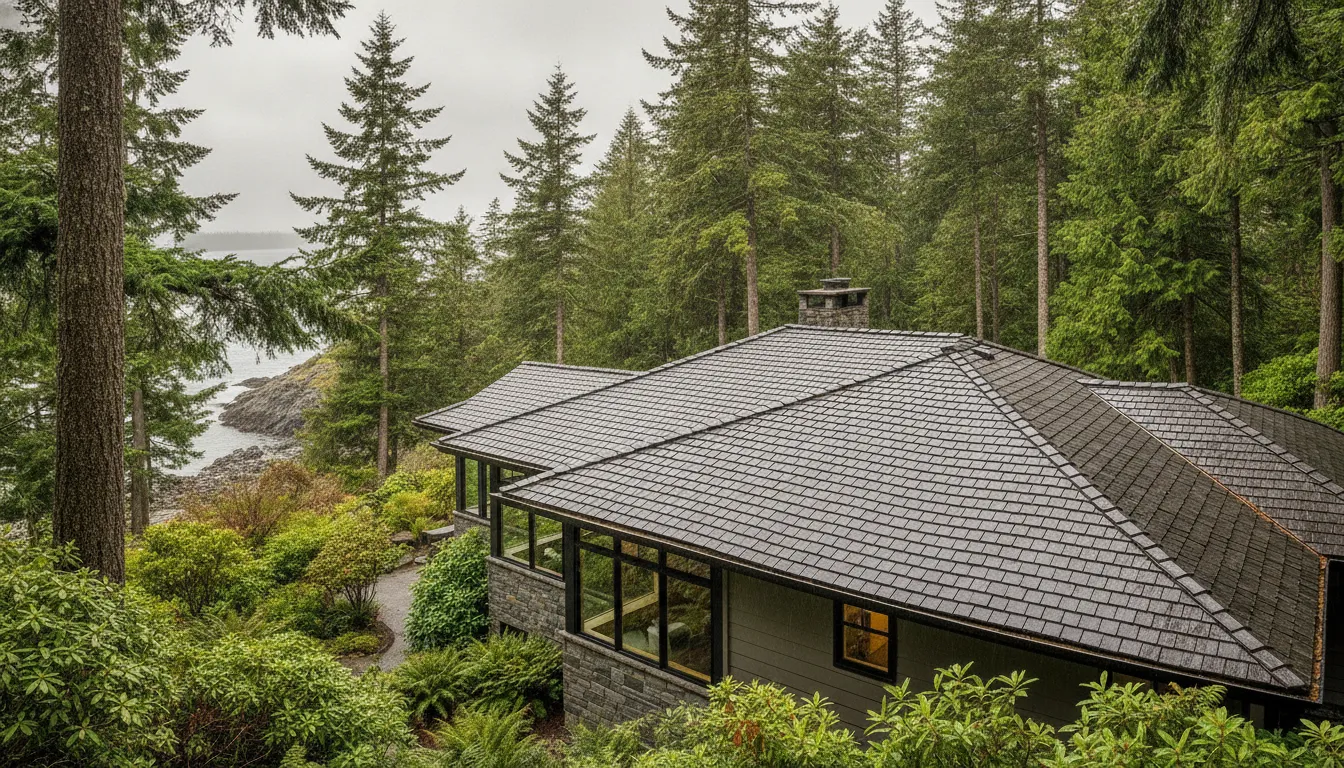
The visual goal is usually a cedar-like roof surface with variation in texture, shadow, and color. Some products are molded to imitate the split, irregular look associated with hand-split cedar shake. That appearance can give a home a traditional character without using natural wood as the roofing material. Homeowners comparing the two should look closely at sample pieces. The depth of the clefts and the amount of visible wood-grain texture can differ from one product to another. A panelized system may create a more regular pattern than individual shake-shaped pieces.
These visual differences matter on a roof that can be seen from the street or from upper floors. Ask to review full-size samples, not only small color chips or online photographs. Observe how the surface changes in direct light and shade. It is also useful to compare the proposed profile with the existing architecture, especially on homes where the roof is a prominent design feature. For related context, Landmark’s Washington composite roofing guide discusses broader questions about composite roofing style and planning.
Why do synthetic shake products vary?
There is no single standard format for synthetic shake roofing. Product lines can differ in color ranges, blended color options, texture, dimensions, and installation format. Some are supplied as individual tile-like pieces, while others use larger panels. A comparison source describes one panelized product with panels measuring 48 inches by 20 inches. But those dimensions belong to that specific system and should not be generalized to other products.
Warranty language also varies. Published comparisons include products with different limited material warranty periods, while some warranties apply only to defined conditions, owners, or installation methods. The warranty may cover the material without covering workmanship, or it may require installation according to the manufacturer’s instructions. Before choosing a system, request the current product data, installation manual, color information, code documentation, and complete warranty. Confirm what the local authority having jurisdiction requires as well. The right comparison is not simply synthetic versus natural cedar. It is one documented roofing system versus another, evaluated for the home’s design, roof assembly, and Washington installation conditions.
Is Synthetic Shake Roofing a Fit for Washington Weather?
Puget Sound weather puts more pressure on a roofing system than a product brochure can show. Persistent rain tests drainage and flashing. Shaded roof planes can collect moss and debris. Wind, falling branches, fire exposure, and occasional hail or impact events raise separate questions about the exact product selected. Synthetic shake roofing may be worth considering, but its suitability depends on the full roof assembly and the ratings documented for that specific system.
How do rain, moss, and drainage affect the decision?
Rain resistance is not only a question of the visible shakes. Water must move across the roof, around penetrations, through valleys, and into properly functioning gutters. The roof slope, underlayment, flashing, ventilation, and installation details all influence how the assembly handles wet conditions. A synthetic material does not eliminate the need for sound drainage or careful detailing.
Moss and debris also deserve attention in Washington. Organic buildup can hold moisture against roof surfaces and obstruct drainage paths, especially beneath overhanging trees or on shaded slopes. During an assessment, a roofing professional should look beyond surface appearance. Landmark’s professional roof inspection checklist includes surface wear, leaks, flashing, moss and debris, drainage, roof penetrations, structural soundness, and attic ventilation. Those findings help determine whether a material change would address the real problem or whether the underlying roof conditions need correction first.
Which wind, fire, and impact ratings should homeowners verify?
Do not assume that every synthetic shake product has the same resistance to wind, fire, or impact. Some products are marketed with Class A fire ratings and Class 4 impact ratings. Others may carry high wind ratings. Those claims belong to the tested product and its approved installation method. Ask for the current manufacturer documentation, including the rating, test standard, fastening requirements, minimum slope, and any limitations.
Building approval is also product- and jurisdiction-specific. A public product-control document, for example, explains that an approval applies where permitted by the authority having jurisdiction and that the complete documentation should be available for inspection when requested. It also notes that acceptance can be modified or suspended if a product fails to perform as accepted. That is a useful reminder to confirm local requirements rather than treating a rating from another jurisdiction as a blanket promise. Landmark’s roofing certifications are another point homeowners can review when evaluating installation experience.
The practical question is whether the selected system, roof design, and installation plan fit the home’s exposure. A Washington roof assessment should connect those details before a material is approved.
How Is Synthetic Shake Roofing Installed?
Synthetic shake roofing should be installed as a complete roof system, not treated as a simple surface replacement. The process begins with an evaluation of the existing roof and ends with a review of drainage, ventilation, flashing, and finish quality. Product formats can differ, including the dimensions and fastening requirements of panelized systems, so the chosen manufacturer’s installation instructions must guide the work.
What does the installation process include?
- Inspect the existing roof. Before materials are ordered, the roofing contractor evaluates surface wear, leaks, flashing, moss and debris, drainage, roof penetrations, structural soundness, and attic ventilation. This inspection helps identify concealed problems that could affect the replacement scope. Landmark’s professional roof inspection checklist explains the areas a residential assessment should cover.
- Confirm the roof geometry and slope. Roof planes, valleys, ridges, hips, eaves, penetrations, and transitions all affect layout. The contractor also confirms that the roof’s slope meets the requirements for the selected synthetic shake system. A material that looks appropriate on a sample may still require a particular pitch, underlayment arrangement, or fastening pattern.
- Prepare the deck and underlayment. Damaged or weakened decking should be addressed before the new roof covering is installed. The underlayment provides a secondary water-shedding layer beneath the shakes, but the exact material and placement should follow the product documentation and local requirements.
- Install flashing and ventilation details. Flashing directs water away from walls, valleys, chimneys, skylights, and other vulnerable joints. Eaves, ridge areas, vents, and roof penetrations also need careful detailing. Proper ventilation is part of the system because trapped moisture can affect the roof assembly and the home’s attic conditions.
- Follow the manufacturer’s instructions. Synthetic shake products are not interchangeable. Installation crews should use the specified fastening method, exposure, layout, edge treatment, and accessory components for the selected system. Landmark says its crews are trained to manufacturer specifications and that the company holds multiple roofing manufacturer certifications. See Landmark’s roofing certifications for more information.
- Complete a final review. The project manager or roofing lead should review alignment, flashings, penetrations, ventilation, drainage paths, cleanup, and any remaining punch-list items. Residential roof replacements generally take three to seven days depending on home size and roofing system, but that is a planning range rather than a fixed promise. Weather, deck repairs, roof complexity, and material requirements can change the schedule.
Landmark uses its own installation crews, while project managers oversee jobs from initial contact through warranty. That continuity gives homeowners a clear point of responsibility when questions arise about the installed system, documentation, or follow-up work.
What Maintenance Does Synthetic Shake Roofing Need?
Synthetic shake roofing is not maintenance-free. It still needs routine attention to keep water moving off the roof and to catch small problems before they affect the deck, insulation, or interior of the home. In the wet Puget Sound climate, maintenance should focus less on cosmetic cleaning and more on moisture management.
What should homeowners check?
Plan periodic visual checks from the ground and arrange a closer professional review when you notice changes. Look for accumulated leaves, branches, moss, or other debris in valleys and low-slope areas. Debris can hold moisture and interfere with drainage. Keep gutters and downspouts clear so roof runoff has a reliable path away from the roof edge and foundation.
Flashing deserves particular attention. Flashing is the material installed around roof edges, walls, chimneys, and other transitions to direct water away from vulnerable joints. Also watch for loose or damaged pieces around roof penetrations, such as plumbing vents and other systems that pass through the roof. A leak does not always appear directly below its entry point, so stains or dampness in an attic should not be dismissed as a minor interior issue.
Ventilation is another part of the maintenance picture. An inspection should consider whether the attic is ventilated appropriately, along with the condition of the roof surface, structure, flashing, drainage, penetrations, and vents. Landmark’s professional roof inspection checklist covers these areas and can help homeowners understand what a complete assessment includes.
When is professional help the safer choice?
Do not walk on the roof to remove moss, inspect a suspected leak, or investigate storm damage unless the work is being handled by a properly equipped professional. Pressure washing, aggressive scraping, and unapproved chemical treatments can damage roofing materials or move water into places it should not go. Ask the installer or manufacturer which cleaning methods are acceptable for the specific synthetic shake system.
Schedule a professional assessment if moss returns quickly or drainage remains slow. Call for help if flashing has shifted or a penetration appears loose. Leaks, attic moisture, sagging, or damaged roof components also need attention. The goal is not to create a maintenance schedule for its own sake. It is to identify conditions that could shorten the service life of the complete roofing system and address them while the repair is still manageable.
When Should You Repair or Replace a Synthetic Shake Roof?
A synthetic shake roof should not be repaired or replaced on age alone. The better decision comes from the roof’s current condition and the source of any water intrusion. It also depends on whether the underlying system can continue to protect the home. A roof that looks acceptable from the ground may still have deteriorated flashing, concealed moisture, blocked drainage, or ventilation problems that change the recommendation.
What inspection findings point toward repair?
Repair may be reasonable when the damage is limited, the surrounding roofing remains sound, and the cause can be corrected without leaving weak transitions. Examples can include a localized flashing problem, a damaged penetration boot, a small area of displaced material, or drainage that can be restored. The repair should address the source of the problem, not only the visible symptom. Replacing a small piece of roofing without correcting the flashing or water path can allow the same leak to return.
In Puget Sound homes, an evaluation should account for moisture and moss as well as visible surface wear. Landmark’s residential inspection process reviews leaks, flashing, moss and debris, drainage, roof penetrations and vents, structural soundness, and attic ventilation. A professional roof inspection checklist can help homeowners understand why each item matters. Water staining in an attic or ceiling also deserves investigation, even when the exterior damage is not obvious.
When is replacement the more practical option?
Replacement deserves serious consideration when problems are widespread, recurring, or connected to the roof deck and structure. Multiple leak locations, extensive deterioration around flashing, persistent drainage issues, sagging areas, or compromised sheathing can make a series of repairs less predictable. Ventilation deficiencies may also need to be corrected as part of a broader roofing project rather than treated as an isolated surface issue.
Warranty records should be part of the review. Synthetic shake is a product category, not one uniform system, and warranty terms vary by the exact product, installation requirements, and covered conditions. Keep the original product information, installer documentation, maintenance records, and repair invoices. Ask whether the proposed repair follows the manufacturer’s requirements, whether replacement materials will match the existing system, and what documentation will be provided after the work.
What should homeowners ask after the assessment?
Request clear answers about the observed damage and its likely cause. Ask about the condition of the deck, flashing, drainage, and ventilation. Confirm the difference between a repair and full replacement. The inspection findings should explain what is known, what requires further investigation, and which work is urgent. That condition-based approach gives homeowners a more reliable decision than using a generic service-life estimate.
How Should Homeowners Compare Synthetic Shake Options?
Material selection should start with the look you want, then move to the details that affect installation, maintenance, and long-term responsibility. Natural cedar, synthetic or composite shake, and standard asphalt can all be appropriate in the right setting. They do not offer the same appearance, upkeep, or documentation.
Compare the roof system, not just the sample
| Option | Appearance and maintenance | Documentation and installation | Fit questions |
|---|---|---|---|
| Natural cedar shake | Provides genuine wood grain and natural variation. Maintenance planning should account for moisture exposure, surface condition, debris, and the details of the existing roof assembly. | Ask about the selected material, underlayment, flashing, ventilation, fastening, and any local requirements. The installer should explain how the roof will be detailed and maintained. | Does the home design support the character of real wood? Is the owner prepared for ongoing inspection and maintenance? |
| Synthetic or composite shake | Many products are designed to reproduce the rustic split texture of cedar, with color options or blends that vary by product line. Texture can differ from natural wood, especially with panelized formats. | Products can differ in material composition, dimensions, panel or tile format, code approvals, ratings, and warranty terms. Review the exact manufacturer installation instructions and current product documentation. | Does the selected product match the desired texture and color? Are its slope, fastening, ventilation, and approval requirements suitable for the home? |
| Standard asphalt | Offers a familiar shingle appearance with product-specific colors and profiles. Maintenance still includes watching for wear, leaks, moss or debris, flashing problems, and drainage concerns. | Confirm the exact shingle system, underlayment, ventilation plan, flashing details, and installation requirements. Warranty coverage depends on the product and installation terms. | Does the homeowner prioritize a familiar appearance and straightforward replacement process over a shake-style profile? |
Do not treat a rating or warranty advertised for one synthetic product as a category-wide promise. Published documentation may address fire, impact, wind, color, or material coverage, but those details belong to the exact product and installation method. Warranty terms also vary. Ask for the current written warranty, identify who is responsible for each type of coverage, and confirm any maintenance requirements that could affect it.
For a Washington home, the comparison should also include the roof’s existing condition. Decking, flashing, penetrations, drainage, and ventilation can influence whether a system is suitable and how it must be installed. A professional roof inspection can help turn a visual preference into a practical decision based on the home’s structure and exposure.
Request a roof assessment for your Washington home.
Frequently Asked Questions
What is a composite shake roof?
A composite shake roof uses manufactured roofing material designed to resemble the texture and appearance of natural cedar shake. The exact composition, tile or panel format, color options, and installation method vary by product, so review the manufacturer’s specifications before choosing a system.
Is synthetic shake roofing suitable for Puget Sound homes?
It can be a suitable option, but weather performance is product-specific. Ask for documentation covering the selected system’s slope requirements, fastening method, wind and impact ratings, fire classification, and local code approvals. Wet conditions, moss, drainage, and attic ventilation should also be addressed during the roof assessment.
How long does a synthetic shake roof last?
There is no single service-life answer for every synthetic shake product. Material quality, installation, exposure, ventilation, drainage, and maintenance all matter. Compare the exact manufacturer’s warranty terms with the installation requirements. Treat the warranty as a product-specific document. It is not a promise that every system performs the same way.
What maintenance does synthetic shake roofing need?
Schedule periodic inspections and keep drainage paths clear of moss, leaves, and other debris. An inspection should check surface wear, leaks, flashing, penetrations, roof vents, structural soundness, and attic ventilation. Do not pressure-wash or use treatments without confirming that the method is approved for the selected roofing material.
What should I ask before replacing my roof with synthetic shake?
Ask how the contractor will evaluate the deck, slope, underlayment, flashing, ventilation, and existing moisture damage. Request the product’s current installation instructions, code documentation, warranty terms, maintenance guidance, and color samples. Confirm who performs the work and how the project will be supervised from installation through warranty service.
Ready to discuss synthetic shake roofing?
A roof assessment can help you compare the condition of your current roof with the requirements of a synthetic shake system. Landmark Roofing & Siding can review the roof, discuss your goals, and help you identify the product documentation and installation details to evaluate for your Washington home. Request a roof assessment to start the conversation.