
Date
Thu Oct 15Roofing underlayment is a layer installed over the roof deck and beneath the finished roof covering. It is part of the roof’s water-management assembly, not a substitute for sound roof covering, flashing, or careful installation. For Washington homeowners planning a replacement, understanding the material and how it fits the whole assembly can make proposal comparisons clearer.
What does roofing underlayment do?
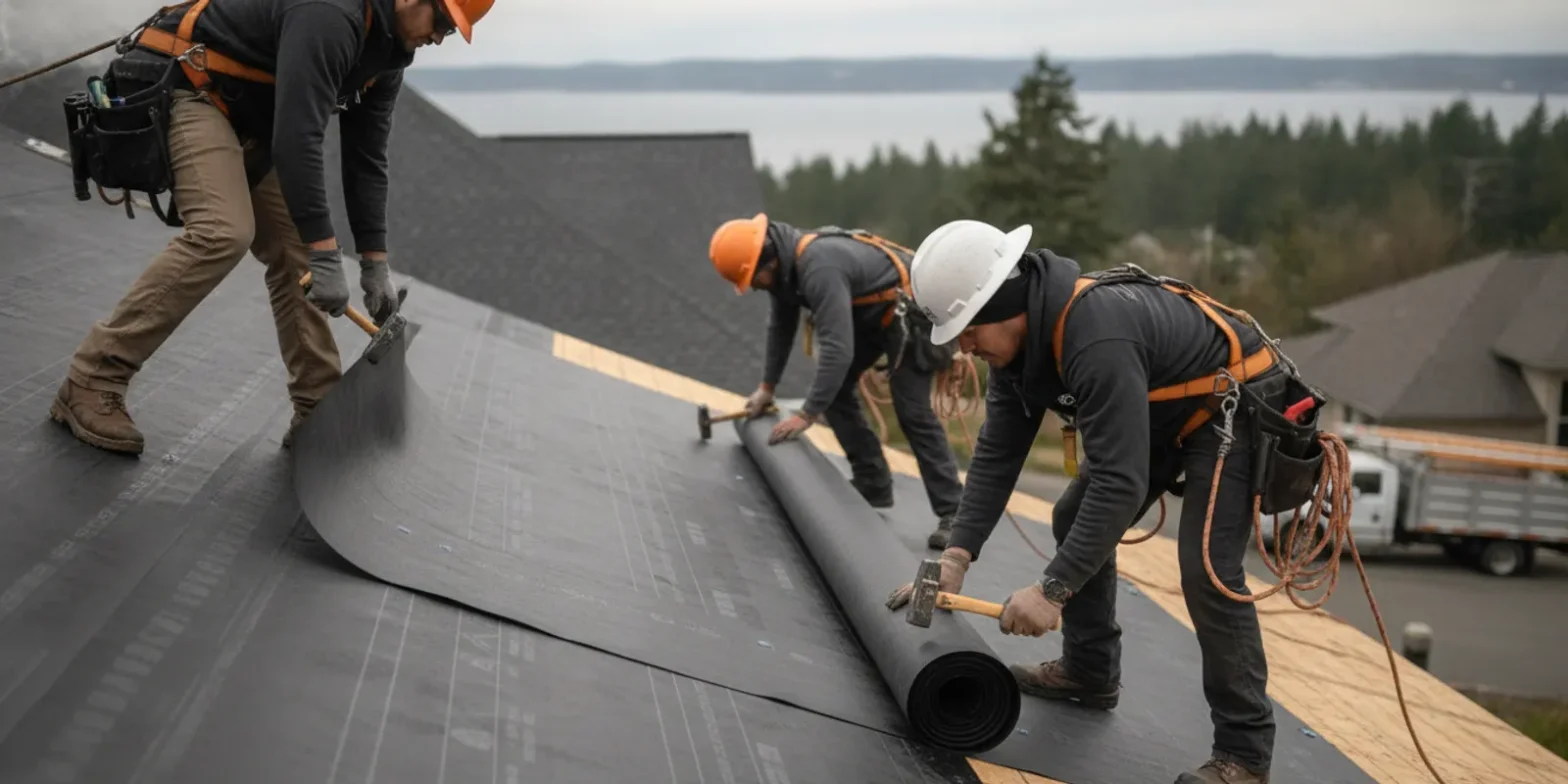
Underlayment creates a secondary layer beneath the visible roof covering. If water gets past the outer surface during certain conditions, this layer can help direct it down the roof toward the eaves, where the assembly is designed to drain it away. It can also cover the deck during the interval between installation stages, subject to the product’s instructions and exposure limits.
That secondary role matters, but it has boundaries. Underlayment does not make an assembly waterproof under every condition, and it cannot correct a roof with damaged decking, poorly placed flashing, open joints, or a drainage problem. The finished roof depends on the parts working together: deck, underlayment, flashing, roof covering, penetrations, and edge details.
Homeowners comparing a residential roofing project should ask what the proposed underlayment is meant to do in the specific assembly. The answer should explain where it will be installed, how laps and transitions will be handled, and how it works with the selected roof covering.
A useful way to think about the layer is as one part of a drainage path. Water should move from the roof covering to the appropriate underlying surface, then down and off the roof. Valleys, edges, skylights, chimneys, plumbing penetrations, and changes in roof plane interrupt that simple path. Each one requires attention to the adjoining materials and the order in which they are installed. A product name by itself cannot show whether those connections have been planned.
What types of roofing underlayment are available?
Common categories include asphalt-saturated felt, rubberized asphalt, and non-bitumen synthetic products. The National Association of Certified Home Inspectors describes these as the three basic underlayment types in its overview of roofing underlayment types. The Asphalt Roofing Manufacturers Association also discusses available product types, specifications, and features in its guidance on steep-slope roofing underlayment.
Those category names are a starting point, not a complete product specification. Products within a category can differ in intended use, installation method, exposure limitations, and compatibility. The product’s published instructions and the requirements for the roof assembly should guide selection. Ask for the actual product name and documentation rather than relying on a generic phrase such as “premium underlayment.”
| Material category | What to ask about | Why the detail matters |
|---|---|---|
| Asphalt-saturated felt | Which product grade, fastening method, and approved uses are specified? | Product grades and installation directions are not interchangeable. |
| Rubberized asphalt | Where is it intended to be used, and what surface preparation is required? | Use and placement can depend on the product instructions and roof details. |
| Synthetic, non-bitumen | What are its exposure limits, fastening rules, and compatible roof coverings? | Handling, temporary exposure, and fastening directions vary by product. |
This comparison does not rank one category as best for every home. Ask the contractor to connect the choice to your roof’s slope, details, roof-covering material, and the manufacturer’s installation instructions.
It also helps to separate material category from application. Two proposals may both say “synthetic,” yet identify different products with different handling requirements. A proposal may also specify one material across most of the roof and a different product in a particular area. That difference is not automatically a problem; the important point is that the plan follows applicable instructions and is explained clearly. Ask which product is being used in each location and how any transition between materials will be treated.
Do not use a sample’s feel, thickness, or color as the only basis for comparison. A physical sample can help you recognize the material, but it does not communicate its limits, approved uses, fastening requirements, or compatibility. Product documentation answers those questions more reliably. If the written scope names a category but not the product, ask how the installer will choose the product and confirm it meets the roof-covering system’s requirements.
How does Washington weather make water management important?
Homes across the Puget Sound region experience extended wet seasons and recurring rain. A roof assembly must shed water reliably, including around valleys, roof edges, chimneys, skylights, and plumbing penetrations. Underlayment provides a layer beneath the roof covering, but water management also depends on directing water across and off the roof without trapping it at seams or transitions.
During a project, a section of deck may be exposed as old materials are removed and new materials are installed. The contractor should explain how the work will be sequenced and how the deck will be protected if weather interrupts the job. Ask what the selected underlayment allows in terms of temporary exposure. Do not assume every product can remain uncovered for the same length of time.
Underlayment is only one part of moisture control. Properly designed ventilation, where applicable, and the condition of the roof deck are separate considerations. If a proposal uses underlayment to promise that leaks cannot occur, ask for a more precise explanation of the system and its limits.
For a homeowner, weather planning is less about predicting an exact start-to-finish schedule and more about understanding how open areas will be managed. Ask whether the crew expects to work in sections, what happens if rain is forecast before a section is covered, and who will explain a schedule change. The answer should be tied to the selected materials and actual site conditions, rather than a blanket claim that a particular underlayment can withstand any delay.
It is also reasonable to ask how water will be kept moving at roof edges and transitions while the work proceeds. This is a project-planning question, not a request to inspect work from a ladder. Homeowners should observe from a safe location and let trained crews handle the roof. If you have concerns about a temporary cover or exposed area, raise them with the project contact promptly instead of attempting an adjustment yourself.
How does the roof covering affect underlayment selection?
The visible roof covering and the layer below it are selected as parts of one assembly. Roof coverings differ in shape, fastening approach, and installation requirements. Those differences can affect which underlayment products are suitable and where additional protection may be specified. A product appropriate for one roof covering should not be presumed appropriate for another without checking the relevant documentation.
For example, a homeowner considering composition roofing should ask which underlayment the roof-covering instructions call for and whether the proposal identifies it by product and location. For metal roofing, ask how the underlayment is intended to work with the panel system and the roof’s specific details. A cedar shake roof likewise needs a selection that fits its own assembly requirements.
These examples are prompts for a project conversation, not universal installation prescriptions. The roof’s slope, valleys, edges, penetrations, and existing conditions all matter. Ask the installer to explain how the proposed underlayment relates to the chosen covering, rather than choosing a material based only on a label or a general claim about durability.
When comparing options, bring the covering and underlayment questions together. First, identify the roof covering specified in the proposal. Next, ask for the product instructions or other documentation relevant to its installation. Then have the contractor explain how the selected underlayment, fasteners, laps, and roof details fit that system. If a change in covering is being considered, revisit the underlayment discussion rather than assuming the original choice still applies.
This matters even when two roof coverings look similar from the street. Their product instructions may call for different installation details, and the design of a particular roof can create additional conditions to resolve. A sound comparison therefore focuses on the documented assembly, not a broad claim that one underlayment works under all coverings. If the proposal allows substitutions, ask what criteria a substitute must satisfy and how you will be told about any change before installation.
What installation details should a homeowner ask about?
A useful proposal names the underlayment or explains how the product will be selected to meet the roof-covering requirements. It should also make clear which areas receive it and whether specific details receive a different treatment. The contractor should be able to describe the plan without relying on vague promises.
- Product identification: What is the manufacturer and product name? Can I review its installation instructions?
- Placement: Where will the material be installed, and how will it be integrated at the eaves, valleys, ridges, and roof penetrations?
- Fastening and laps: What overlap and fastening approach does the product require?
- Weather sequencing: What are the product’s temporary exposure limits, and how will open roof areas be protected?
- Compatibility: Does the product meet the roof-covering system’s applicable requirements?
- Documentation: What will the homeowner receive showing materials used and the completed scope?
These questions can help you compare proposals on scope, not just on the material name. If two bids list different products, ask each contractor to explain the intended application and how it meets the roof-covering instructions. A clear answer should identify what is included and what conditions could change the work after removal of existing materials.
One practical way to keep the conversation organized is to write down the answers in the same order for each proposal. For instance, record the product name, where it will be installed, what documentation supports its use, and how weather delays are handled. You can then compare each answer side by side. If an item is not specified, note it as a question rather than assuming it is included or excluded.
Ask how the crew will handle details that are easy to overlook in a short estimate. These can include changes in roof plane, edges, penetrations, and areas where existing conditions are uncovered during removal. You do not need to prescribe a technical detail; you need enough information to understand that it has been considered, and where the final scope will be documented. Ask the contractor to explain unfamiliar terms in plain language.
What should you check in a roofing proposal?
Look for a clear boundary between standard installation and work that depends on what the crew finds after the old covering is removed. The proposal can state how concealed deck conditions will be documented and how the homeowner will approve any change. This prevents an unclear scope from being mistaken for a promise to replace or repair every hidden condition. Also ask whether the contractor will identify any substitutions in writing and provide the product information for the material actually installed.
Read the material and installation scope alongside the rest of the replacement plan. Look for the underlayment type or a clear product-selection basis, the roof areas included, and notes about transitions and penetrations. Confirm whether removal and disposal, deck inspection, and any additional work discovered after tear-off are addressed separately. These are project-scope questions; they do not mean that every home will need deck repairs or extra layers.
Compare like with like. If one proposal describes the underlayment in detail and another only says “standard,” ask for clarification before judging the difference. Ask whether the quoted product is intended for the selected roof covering, and request the manufacturer’s instructions or specification sheet. If a proposal includes a material substitution, ask how the replacement will meet the same applicable requirements.
For a more complete replacement budget conversation, Landmark’s roofing cost calculator is another resource to review. A calculator cannot determine which underlayment belongs in a particular assembly, so use it separately from product and scope questions. Keep the estimate, product documentation, and any written scope updates together so you can refer to the same information throughout the project.
Landmark’s roof replacement process guide offers a separate overview of planning a replacement. You can also review the company’s roofing and exterior FAQs while preparing questions for a project discussion.
How can you follow the installation plan?
Before work begins, keep a copy of the written proposal and the underlayment product information. Ask the project contact to explain how the crew will handle the roof if rain interrupts work, and where to direct questions during installation. If you review progress from the ground, stay clear of ladders, tools, and active work areas. Roofing work is not a safe do-it-yourself inspection task.
At the agreed project checkpoints, ask for a brief explanation of the work completed and any changes from the original scope. If concealed conditions become visible after removal, request a description of the issue, the proposed response, and any effect on materials or cost before approving additional work. Photos can help document areas that will be covered, but they do not replace product instructions or a professional inspection. At completion, keep the final scope, product details, and any applicable warranty documents together with your home records.
A short record can make later questions easier to resolve. Note the date of a conversation, the product or area discussed, and any action agreed upon. Save emails, updated estimates, and photos shared by the contractor in one project folder. If a product is changed, retain the revised information rather than relying on memory or an informal verbal description. These habits do not require technical knowledge; they simply help keep the documented plan clear.
What are common misunderstandings about underlayment?
“A thicker product is always better.” Thickness alone does not establish suitability. The right product depends on the product’s intended use, installation instructions, and the selected roof assembly. Ask what requirement the proposed material satisfies instead of comparing one specification in isolation.
“Underlayment can fix a roof leak by itself.” A leak can involve a roof-covering defect, flashing, an opening, or another part of the assembly. Underlayment is not a stand-alone repair. The source of water entry needs to be assessed, and the repair should address the relevant component.
“Every roof needs the same material everywhere.” Requirements can differ by product and by roof detail. A contractor should explain the plan for the whole roof and any areas with distinct requirements. Do not infer the design from a single sample or from what was used on another home.
“A familiar category name tells me enough.” A category label does not identify every product property or installation condition. Get the manufacturer and product name, then review the documented intended use, exposure limits, and fastening instructions. If the proposal does not yet name a specific product, ask what will determine the final selection and when that information will be provided.
“The underlayment is the only layer that matters for leaks.” Water management depends on a complete assembly. The roof covering, flashing, edges, transitions, penetrations, deck, and drainage path all play a role. A question about underlayment should lead to a discussion of how the layers meet, not an assumption that one material can compensate for every other condition.
How can you make a practical decision?
Start with the roof-covering system you are considering, then confirm the underlayment requirements in the relevant documentation. Review the roof’s details and ask how the installation plan addresses them. Finally, compare proposals based on identified materials, described placement, weather protection, and written scope.
For a Washington home, the most useful choice is not a category name in isolation. It is a product and installation plan that fit the roof, follow applicable instructions, and make the water-management details understandable. If an answer is unclear, ask the contractor to point to the product documentation or describe the detail in the written proposal.
Before signing, use a simple final check: Do you know what product is planned, where it will be used, how the crew will handle temporary exposure, and what documentation will be supplied? Do you understand how the contractor will communicate any concealed condition or substitution? If you can answer those questions from the written scope, you have a much clearer basis for comparing plans than a broad label or a promise without details.
Discuss your roof replacement questions
Frequently asked questions
Is roofing underlayment visible after the roof is complete?
Usually, underlayment sits beneath the finished roof covering and is not visible in the completed roof. During replacement, portions may be visible as the work progresses. Ask the contractor how open areas will be managed if weather affects the schedule.
Can underlayment be left exposed during installation?
Exposure limits vary by product. Review the manufacturer’s instructions for the specific material in the proposal and ask how the crew will protect exposed sections. Do not assume a product can remain uncovered indefinitely.
Does every roof need the same underlayment?
No single material should be assumed to fit every roof. Roof-covering requirements, roof details, and product instructions guide selection. Ask the contractor to identify the proposed product and explain why it fits your assembly.
What is the best first question to ask a roofer?
Ask which underlayment product is included and how it will be installed with the roof covering you selected. Then ask where it will be used, what the product instructions require, and what documentation will confirm the work.
A clear underlayment discussion helps you understand how the layers of a roof work together and what your replacement proposal includes.