

Date
Mon Aug 24Roofing Redmond: A Homeowner’s Guide
Redmond roofs have to manage repeated rain, moss, changing temperatures, drainage demands, and complex roof-to-wall details. A sound roofing plan starts with the entire assembly, not only the visible shingles. This guide explains how local weather affects roof decisions, how to compare common materials, when repair may be enough, what a written estimate should include, and which permit questions to ask before work begins.
Request a roofing assessment before a small concern becomes a larger repair.
A practical roofing redmond plan connects roof type, slope, drainage, flashing, ventilation, and deck condition. It also uses a written scope and confirms current permit requirements with the City of Redmond or the applicable authority before work starts.
How Should Roofing Redmond Homeowners Prepare for Wet Weather?
Answer: Roofing Redmond projects should account for persistent rain, drainage, flashing, ventilation, and roof-deck condition. A professional inspection connects these parts before repairs or replacement begin. Homeowners should confirm local requirements with the City of Redmond because the scope of work determines which approvals may apply.
Rain tests every transition in a roof system. Water must move from the roof surface into valleys, gutters, and downspouts, then away from the walls and foundation. A weak flashing detail can redirect water behind the roof covering, while a blocked drainage path can keep moisture against roof edges and fascia.
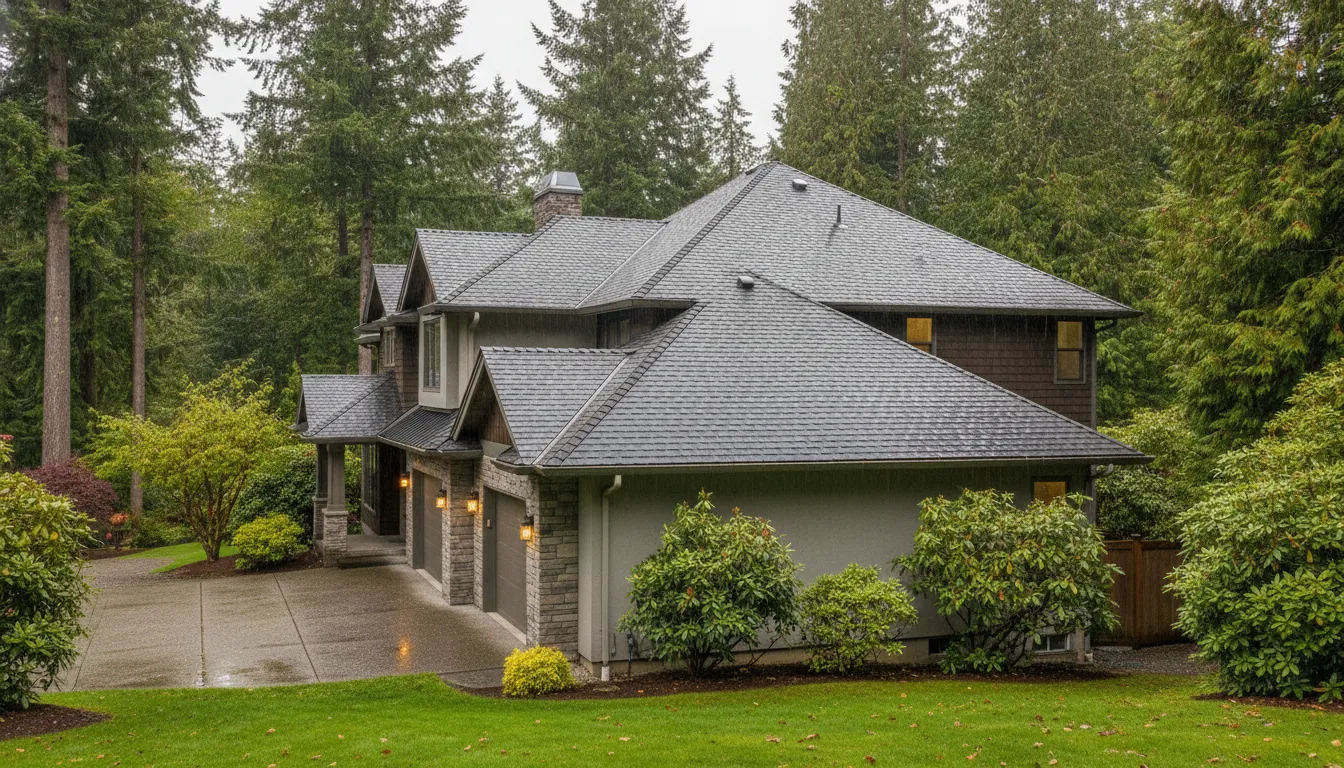
An inspection should review the roof covering, slope, underlayment, flashing, penetrations, drainage, ventilation, and any evidence that moisture has reached the deck or attic. Interior stains are useful clues, but the visible mark may be several feet from the entry point.
The City of Redmond publishes climatic and geographic design criteria that can inform local construction discussions. Review the City’s climatic and geographic design criteria when discussing a project scope. Washington’s residential building code is also available through the Washington building code provisions.
Check drainage and flashing first
Keep gutters, downspouts, valleys, roof edges, and roof-to-wall transitions in the inspection conversation. Flashing helps direct water around chimneys, skylights, vents, dormers, and walls. Gaps, lifted edges, exposed fasteners, staining, or recurring leaks deserve more than a surface patch.
Pair ventilation with a sound roof surface
Ventilation helps manage attic moisture and heat, but it cannot correct damaged flashing or a roof covering that is admitting water. The inspection should look at intake and exhaust paths, condensation, damp insulation, and the condition of the roofing above. A surface-only recommendation can miss a problem in the larger assembly.
For additional inspection context, see Landmark’s professional roof inspection guide. A documented inspection gives a homeowner a clearer basis for maintenance, repair, or replacement decisions. Landmark’s roof leak repair guide explains common leak sources, while its Washington roof replacement cost guide outlines other scope factors.
Which Roof Types Fit Redmond Homes?
Answer: Composition, metal, cedar shake, and premium composite roofing can fit Redmond homes when the slope, drainage, flashing, ventilation, and maintenance plan are appropriate. The right selection depends on the complete assembly, the home’s design, exposure, and long-term priorities rather than on a material sample alone.
Material selection should follow an evaluation of the home. Roof slope, existing decking, ventilation, exposure, architectural style, maintenance expectations, and compatibility with adjacent components all matter. A material that performs well on one property may require a different installation approach on another.
Composition roofing is a practical option for many residential designs. It offers broad appearance choices and established installation methods. Review Landmark’s composition roofing service when comparing underlayment, flashing, ventilation, and installation details.
Metal roofing offers a distinctive appearance and a durable material category. The profile, fastening method, slope, penetrations, and drainage pattern should be documented before selection. Ask how the proposed system will manage water at walls, chimneys, skylights, and other transitions.
Cedar shake roofing provides natural texture and a traditional Pacific Northwest appearance. It also requires a realistic maintenance plan in a damp environment. Ask how the proposal addresses moss, lichen, fungus, drainage, cleaning, and inspection access.
Premium composite systems can support a high-end design goal, but the proposal should identify the exact system, installation requirements, warranty terms, and compatibility with the existing roof structure. Avoid choosing solely by appearance.
| Roof system | Potential advantages | Questions to ask |
|---|---|---|
| Composition or asphalt | Versatile appearance and established installation methods. | How will the contractor address underlayment, valleys, ventilation, and flashing? |
| Metal | Distinct appearance and durable material options. | Is the profile suited to the slope, drainage, and surrounding architecture? |
| Cedar shake | Natural texture and Pacific Northwest character. | What maintenance plan will address moisture, moss, and lichen? |
| Premium composite | Design flexibility for a custom appearance. | What system requirements and warranty conditions apply? |
Compare complete assemblies, not material samples. A useful proposal identifies preparation work, roof covering, underlayment, flashing, ventilation, drainage details, substrate allowances, cleanup, and exclusions. Those details make it easier to compare long-term performance and maintenance responsibilities.
What Roof Maintenance Matters Most in Redmond?
Answer: Redmond roof maintenance should focus on safe observation of moss, lichen, debris, drainage, flashing, attic moisture, and roof-edge changes. Homeowners should avoid climbing wet or steep roofs. Document visible changes from the ground and arrange a professional review when leaks, sagging, missing materials, or recurring drainage problems appear.
Small observations can reveal a larger issue. Moss and lichen may hold moisture against roofing materials, while leaves and needles can slow drainage. A seasonal review does not require climbing onto the roof. Look from a safe position and arrange professional access when the roof is steep, wet, damaged, or difficult to reach.
- Look for growth and surface changes. Check roof edges, shaded slopes, and areas beneath overhanging trees from the ground. Green growth, dark staining, lifting materials, or spreading patches deserve attention. Do not scrub, pressure-wash, apply chemicals, or attempt roof work without suitable training and fall protection.
- Watch drainage after rain. Observe whether water overflows at roof edges or collects near downspout outlets. Persistent overflow, stained fascia, or water near the foundation can indicate a drainage problem. Do not reach onto the roof or lean a ladder against an unstable surface.
- Inspect visible flashing. Look from a safe viewpoint for bent metal, gaps, exposed fasteners, lifted edges, or staining near chimneys, walls, skylights, and vents. A ceiling mark or damp insulation near a penetration is a warning sign even when the roof surface looks acceptable.
- Review accessible attic conditions. If the attic is safely accessible, note musty odors, visible moisture, damp insulation, or condensation. Do not enter an attic with structural damage, active water intrusion, electrical hazards, or poor access.
- Record changes and request a review. Photograph warning signs from the ground and note when they appeared. Schedule an inspection for missing or displaced materials, sagging, recurring leaks, widespread staining, damaged flashing, or drainage that remains poor after safe debris removal.
Maintenance observations are most useful when they lead to an inspection-based decision. A professional can distinguish surface growth or debris from damage to the roof covering, flashing, drainage, ventilation, or substrate.
Should You Repair or Replace a Redmond Roof?
Answer: Repair may fit a localized defect when the surrounding roof assembly remains sound and dry. Replacement becomes more likely when damage is widespread, leaks recur, or the roof covering, flashing, ventilation, and substrate are failing together. An inspection should identify the source and extent before a contractor recommends either scope.
A roof problem does not automatically mean the entire roof needs replacement. A limited area of damaged shingles, a discrete flashing failure, or a single penetration may be repairable when adjacent materials remain serviceable and the underlying structure is dry.
Replacement becomes more likely when leaks return, deterioration is widespread, or multiple parts of the system are no longer performing together. Repeated patching can leave damaged underlayment, decking, or framing unaddressed. The inspection should identify the source of the water and the extent of any concealed damage.
Signs that a repair may be appropriate
Localized damage is the clearest repair scenario. The proposal should identify the affected area, the failed component, the repair method, and how the contractor will confirm that the water path has been addressed. A ventilation concern should also be diagnosed as part of the roof assembly rather than treated with an isolated vent change.
Signs that replacement may be the better scope
Widespread wear, brittle or displaced materials, recurring leaks, failed flashing, and substrate deterioration can change the repair calculation. A replacement scope can address the covering and supporting layers as a coordinated system. That does not mean every older roof requires immediate replacement. Exposure, prior repairs, installation quality, slope, ventilation, and substrate condition all affect the recommendation.
Landmark’s Redmond residential roofing can help Redmond homeowners review roof condition before choosing a path. The right scope is the smallest one that properly resolves the underlying problem.
What Should a Roofing Estimate Include?
Answer: A useful roofing estimate identifies the observed condition, proposed materials, tear-off and disposal, underlayment, flashing, ventilation, substrate allowances, cleanup, schedule, payment terms, exclusions, and warranty responsibilities. Comparing these details helps Redmond homeowners evaluate the full scope instead of choosing by headline price alone.
A written estimate should connect the proposed work to inspection findings. It should identify damaged or missing materials, soft or deteriorated decking, leaks, flashing, drainage, and visible ventilation concerns. If replacement is recommended, the document should explain why a repair is insufficient.
Ask whether the scope includes removal of the existing roof, underlayment, new roofing materials, flashing, ventilation components, cleanup, and disposal. Clarify whether damaged substrate is included or billed separately if discovered after removal. The estimate should also identify the material type, number of layers to be removed, and any system-specific installation requirements.
Review exclusions and payment terms
Read exclusions as carefully as inclusions. They may address hidden structural damage, interior repairs, permits, additional layers, or weather-related delays. A clear schedule should state the expected start window, major stages, cleanup expectations, and conditions that could change timing. Ask for important commitments in writing.
Payment terms should show the amount and timing of each payment, accepted methods, and completion conditions. Before signing, verify the contractor’s Washington registration. Landmark’s roofing estimate guide provides additional questions for comparing written proposals.
Ask about warranty responsibilities
Warranty language should distinguish workmanship coverage from manufacturer material coverage. Ask who provides each warranty, how long it lasts, what maintenance is required, and what exclusions or claim procedures apply. Review Landmark’s roofing warranty information as you prepare questions, and request complete written conditions rather than relying on a summary phrase.
What Local Permit Questions Should You Ask?
Answer: Redmond permit questions depend on the exact roofing scope and property conditions. Ask which authority reviews the work, whether the proposed repair or replacement requires approval, who submits the application, and what inspections or final documents apply. Confirm the current answer with the City of Redmond or the applicable authority before work begins.
Permit planning starts with the project scope. A limited repair may raise different questions than a replacement involving extensive tear-off, structural work, altered roof geometry, or changes to drainage and ventilation. Do not rely on a generic rule or an old contractor statement.
- Does this exact repair or replacement require a permit?
- Which authority reviews the work, and who submits the application?
- Could concealed damage, sheathing repairs, skylights, structural changes, or a roof-shape change alter the requirements?
- What inspections, documents, or final approvals are required?
- Are neighborhood, HOA, or property-specific restrictions relevant?
Ask for the answers in writing and keep them with the proposal, product information, and inspection records. If concealed damage changes the scope, ask how the discovery affects approvals and the work plan. Requirements can change, so confirm the current answer directly with the City of Redmond or the applicable authority.
Request a written roofing assessment for your Redmond home.
Landmark Roofing & Siding has served Puget Sound homeowners since 2005. Schedule a Redmond roofing assessment or estimate.
Frequently Asked Questions About Roofing Redmond
What is a fair price for a new roof?
A fair price reflects the actual scope rather than a universal per-square-foot number. Roof size and slope, material selection, tear-off, disposal, deck repairs, flashing, ventilation, cleanup, labor, and warranty terms can all affect the total. Compare written scopes line by line before choosing.
What is the 25% rule for roofing?
The 25% rule is often used as shorthand in repair, replacement, or permit discussions, but it is not a universal answer for every Redmond property. Its meaning depends on current code, project scope, and the authority reviewing the work. Ask which rule is being referenced, then confirm current requirements with the applicable authority.
How can I tell if a roofer is misleading me?
Be cautious if a roofer pressures you to decide immediately, refuses to provide an upfront written bid, will not explain the proposed scope, or asks for full payment before completion. A sound proposal identifies materials, exclusions, ventilation and flashing work, payment terms, and warranty language.
How much does a 2,000-square-foot shingle roof cost?
There is no responsible fixed price based on house square footage alone. A home’s roof area may be larger than its floor area, and slope, layers, access, decking, flashing, ventilation, shingle selection, and disposal can change the total. Request an inspection-based estimate with a detailed written scope.
Landmark Roofing & Siding has served Puget Sound homeowners since 2005 with roofing inspections, repairs, and replacement planning. Schedule a Redmond roofing assessment or estimate.