
Date
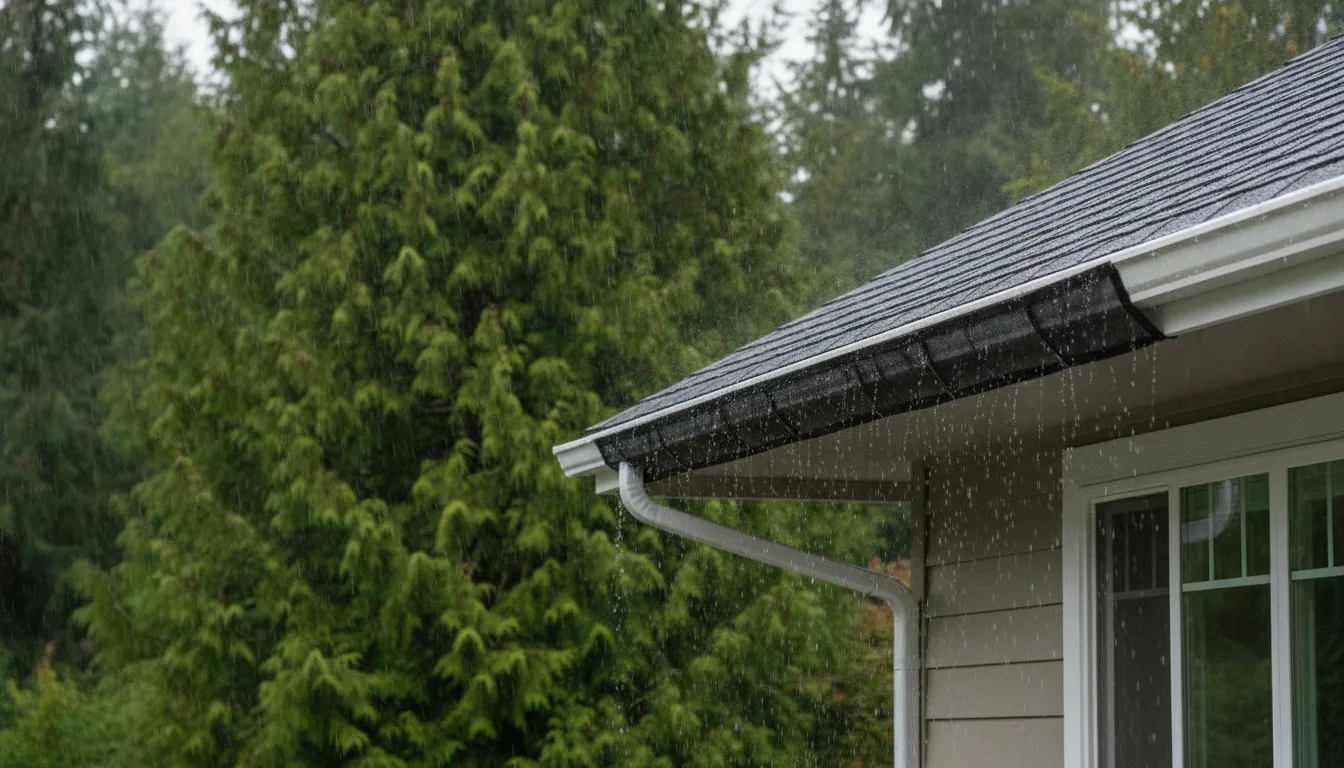
Thu Sep 10Gutter guards can reduce the leaves, needles, and roof grit that reach a gutter. They are not a set-it-and-forget-it product. In Washington, successful gutter guard installation starts with the roof edge, the gutter slope, the downspouts, and the path rain takes once it leaves the house. The right cover should keep debris out without slowing drainage or hiding a problem that already exists.
Schedule a gutter guard consultation with Landmark Roofing & Siding.
This guide explains when a guard fits a Puget Sound home, how to prepare the roof edge, which designs to compare, and when professional installation is the safer choice. It stays on the installation decision. Pricing for a full gutter system, routine cleaning schedules, and city service pages are separate topics.
Are gutter guards a good fit for Washington homes?
Gutter guards can be a good fit for Washington homes with sound gutters, heavy tree cover, and recurring debris, but the guard must match the roof, the gutter, and the drainage system. A cover reduces what enters the channel. It does not repair a sagging run, correct poor pitch, clear a blocked downspout, or end every maintenance visit. A site look is the best way to tell whether installation will solve the problem the homeowner actually has.
Homes from Redmond and Bellevue through Kirkland, Seattle, Sammamish, and Issaquah often face a long wet season. Shaded roofs, evergreen needles, deciduous leaves, and steady rain all show up on the same eave. Debris control is useful in those conditions. Water flow still comes first. A guard that holds fine organic material can still need cleaning. A guard installed over a damaged gutter can hide the leak until staining shows up on the fascia or siding.
Gutter guards are most promising when:
- Trees regularly drop leaves or needles onto the roof and gutter.
- The existing gutters are attached, pitched, and free of major leaks.
- Downspouts and discharge points can handle the roof runoff.
- The goal is fewer cleanings, not zero maintenance.
- The roof edge can accept a guard without disturbing shingles or flashing.
They may not be the first investment when gutters pull away from the fascia, water spills over in ordinary rain, downspouts are undersized or blocked, or the roof edge already needs repair. Fix the drainage and roof-edge problems first. Landmark’s gutter replacement process guide covers the separate decision to replace a failing system.
A useful test is simple. After a typical rain, walk the house and note where water leaves the roof. If it enters the gutter and leaves through the downspout, a guard may be the next conversation. If water sheets over the front lip, pools in the channel, or stains the siding, the gutter itself needs attention before any cover goes on.
Tree mix matters as much as tree count. A maple that drops broad leaves for a few weeks is a different problem from a cedar that sheds needles all year. Moss and roof grit are different again. Name the material that actually reaches the gutter before you pick a product. A guard chosen for the wrong debris often looks fine on install day and mats over by the next wet season.
Eastside homes in places such as Woodinville, Bothell, and Sammamish often sit under mixed evergreen cover. Seattle and Shoreline homes can add steep lots, tight side yards, and multi-story eaves. The weather pattern is shared. The access and the debris are not. That is why a neighbor’s guard is not a specification for your house.
What should happen before gutter guard installation?
Before gutter guard installation, the installer should inspect and clean the gutters, test the downspouts, check the hangers and slope, and note roof-edge details that could affect the guard. Preparation decides whether water will reach the gutter, whether the guard can be fastened securely, and whether the finished system can be serviced later. Skipping it is how a new cover ends up trapping an old clog.
- Inspect the roof edge. Look for cracked shingles, loose drip-edge metal, exposed underlayment, and spots where a guard could block water shedding. Do not force a guard under roofing that is brittle or poorly installed.
- Evaluate the gutters. Check for sagging, open seams, corrosion, loose hangers, and poor pitch. A gutter that holds standing water needs correction before a cover is added.
- Clean the channels. Remove leaves, needles, roof grit, and packed sediment. Installing over debris keeps the problem in place and can stop the guard from sitting flat.
- Flush and test the downspouts. Water should move through each outlet without backing up. Confirm that elbows, extensions, and discharge areas do not send concentrated flow against the foundation or a walkway.
- Measure each run. Corners, inside and outside miters, valleys, roof transitions, and downspout openings need accurate measurements. One universal piece may not fit every section of the same house.
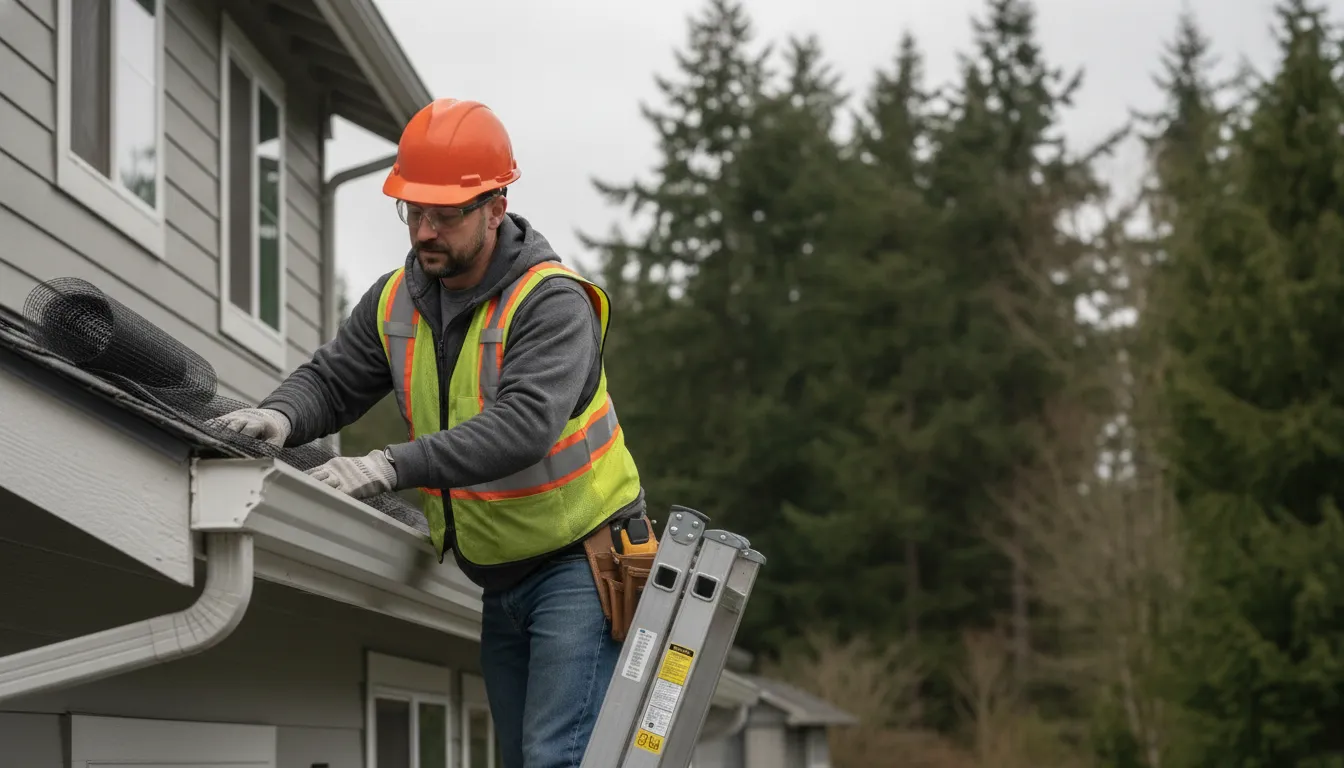
- Plan access and fastening. Decide whether the work can be done from a stable ladder or needs roof access. Choose fasteners that hold the guard without damaging the gutter or the roof edge.
Washington stormwater guidance treats roof downspouts and runoff conveyance as part of the larger drainage picture. The cover is only one piece. The Snohomish County gutters and downspouts guide explains how to keep roof drainage directed away from the foundation and how to maintain the system.
Ask the installer to write down what was found before any product is recommended. A short note on pitch, hanger condition, outlet flow, and roof-edge damage gives you something to compare against the proposal. It also makes later maintenance clearer, because you know which sections were already weak.
Preparation should also cover what the guard will sit on. An older sectional gutter with open seams behaves differently from a continuous run. Hangers that are already loose will not get stronger once a cover adds weight and wind load. If a section needs new hangers, a resealed corner, or a corrected outlet, do that work in the same visit. Covering it first only hides the repair.
Measure the front lip and the back of the gutter, not just the length of the run. Guards are sized to a gutter profile. A piece made for a different lip can rattle, lift, or leave a gap that catches needles. Note inside corners, outside corners, and any place two roof planes meet. Those pieces are where a generic kit most often fails to sit flat.
Which gutter guard design should you compare?
Gutter guard designs solve different debris and maintenance problems, so the best choice depends on the roof, the trees, the gutter shape, and the material that actually reaches the gutter. A product that works under broad maple leaves may behave differently under fine cedar needles, roof grit, or moss debris. Ask how the guard sheds water, how it is attached, and how a section can be removed for service.
| Design category | Potential strengths | Questions to ask |
|---|---|---|
| Mesh or micro-mesh | Can screen out many small particles while letting water through. | How will fine roof grit and moss debris be cleaned from the surface? |
| Perforated metal or screen | Offers a straightforward barrier and may be easy to inspect. | Are the openings right for the home’s leaf and needle load? |
| Solid-surface or hood-style | Uses the shape of the cover to direct water over the front edge. | Does the roof pitch and local rainfall support reliable flow? |
| Brush or foam insert | Can be simple to place in some open gutter runs. | How quickly will organic material collect in or on the insert? |
A label cannot predict performance at every home. A roof valley may need a different approach from a straight run under evergreens. Keep access to corners and downspout outlets so a future cleaning does not require tearing the whole system off.
Fastening matters as much as the screen or hood. Some guards clip to the front lip. Others slide under the first course of roofing or screw into the gutter. Each method has a tradeoff. A clip that is easy to remove may lift in wind. A fastener that is very secure may be harder to service and can stress an older gutter. On a steep or multi-story roof in Kirkland, Bellevue, or Seattle, the fastening plan should be part of the written scope, not a detail left for install day.
For context, Landmark’s seamless gutter installation guide explains how a gutter system protects a foundation. Guards are an accessory to that drainage system. They are not a substitute for gutters that are sized and installed correctly. If you are still choosing between gutter styles, the seamless and sectional gutter comparison is the better starting point.
Match the design to the debris, then to the roof. Fine needles and roof grit favor a tighter screen, with a plan for cleaning the surface. Broad leaves may shed from a more open cover, as long as the openings do not pass the leaves into the channel. A steep roof can throw water past a low hood. A low-slope roof may not have the speed a surface-tension cover expects. Ask the installer to name which runs get which treatment, especially at valleys.
Service access belongs in the comparison too. A guard you cannot lift at the downspout will turn a small clog into a full removal. Ask how one section comes off, what tools that takes, and whether the fasteners can be reused. A design that looks cleaner on day one can cost more every time the outlet needs a flush.
How does gutter guard installation affect drainage?
Gutter guard installation changes how rainwater enters the channel and how debris sits along the roof edge. A well-fitted guard should admit water in ordinary and heavy rain, leave the gutter securely attached, and keep downspout openings clear. A poor fit can create overflow, trap debris, or send runoff past the gutter entirely.
During an evaluation, pay attention to these drainage details:
- Roof valleys: Concentrated water can overshoot a low cover or expose weak fastening.
- Gutter pitch: A cover cannot correct a channel that drains too slowly toward its outlet.
- Downspout openings: The guard should be trimmed so debris does not form a dam around the outlet.
- Runoff discharge: Extensions or splash control may be needed to move water away from the foundation.
- Heavy rain: Ask how the system is expected to behave when a roof section sees more flow than usual.
King County notes that roof runoff from developed surfaces can reach local waterways. It recommends sending downspouts toward suitable planted areas instead of a concentrated dump at a street drain. Its stormwater runoff guidance is a reminder that a gutter cover should support the whole drainage path, not only the look of the gutter.
Overflow is a separate problem from debris. If water already sheets over the front lip in a normal storm, adding a cover will not fix the cause. Undersized gutters, flat pitch, a crushed elbow, or a valley that dumps too much water onto one run all need their own correction. Landmark’s guide to gutter overflow causes walks through those signs so you can tell a cover problem from a drainage problem.
Get a professional review of your gutters, downspouts, and roof edge before choosing a guard system.
Watch the first hard rain after installation, from the ground. Water should enter along the guard and leave at the downspout outlet, not sheet over the front lip or drip behind the gutter at the fascia. A short test with a hose at one valley, done by someone who can do it safely, shows whether concentrated flow stays in the system. If it does not, stop and correct the fit before the rest of the house is covered.
Discharge still matters after the guard is on. A clear gutter that dumps at the foundation only moves the problem. Extensions, splash blocks, or a planted dispersal area should carry water away from siding, walkways, and the footing. On sloped lots in Issaquah, Renton, or North Bend, note where that water goes in a long storm so it does not collect against a lower wall.
Ice and wind are part of the same check, even in a mild Puget Sound winter. A guard that ponds water at a cold eave can contribute to ice along the edge. A guard with lifted clips can whistle or shift in a fall windstorm. Neither issue means guards are a poor idea. Both mean the fit, the pitch, and the fastening need a second look before the season turns.
What maintenance do gutter guards still require?
Gutter guards reduce the debris that enters a gutter, but they still need inspection and occasional cleaning. Leaves can mat on top of the guard. Needles can lodge at the edges. Fine material can settle near corners and downspout outlets. How often you check depends on tree cover, roof debris, guard design, and how much wind and rain the house sees.
Check the system seasonally and after heavy leaf fall or wind. Look for:
- Leaf mats or needles covering the water-entry surface.
- Overflow marks on the fascia, siding, or soil beside the foundation.
- Loose sections, lifted edges, or missing fasteners.
- Water staining below seams or corners.
- Slow flow at the downspout outlet.
- Moss, roof grit, or organic material in places the guard does not cover.
Do not pressure-wash from the roof edge, and do not pry sections up without knowing how they are fastened. A ground-level look can be enough for a homeowner who can see the gutter safely. Climbing to the roof edge is not worth a fall. Landmark’s gutter cleaning maintenance guide explains when routine cleaning and professional service belong in a Washington home’s plan.
A practical schedule for many Puget Sound homes is a look in late fall, after the leaves drop, and another in spring, after winter rain and wind. Homes under dense evergreens in places such as Woodinville, Sammamish, or Issaquah may need a shorter interval because needles fall year-round. Write down what you see. A section that mats every season is telling you the design, the tree cover, or both need a different plan.
Be wary of any claim that a guard is maintenance-free. The honest promise is fewer trips into a full gutter, not a gutter you never look at again. Surface debris, outlet dams, and fastener checks are still part of owning the system.
Keep the check simple enough that you will actually do it. From the ground, look for a dark mat on the guard, a drip line on the siding, or a downspout that barely runs during rain. Note the date and the side of the house. Two seasons of the same note on the same corner is more useful than a vague sense that the gutters are fine.
If a section needs cleaning, ask how that product is meant to be cleared. Some surfaces can be brushed from a stable ladder. Others should be lifted only at the outlet. Forcing a hose under a fastened guard can drive grit deeper into the channel. When the eave is high, wet, or over a slope, that cleaning belongs with the same crew that understands the fastening.
When should you hire a professional installer?
Professional gutter guard installation makes sense when the work involves roof access, complex roof lines, damaged gutters, difficult downspouts, or repairs that should happen before the cover goes on. A professional can inspect the full water path instead of treating the visible gutter as a standalone part. Landmark installs and replaces gutters as part of its exterior work across the Puget Sound area, and a guard decision fits that same inspection.
Request an evaluation when:
- The gutters sag, leak, pull away from the fascia, or have unknown pitch.
- The roof is steep, multi-level, or hard to reach safely.
- There are several valleys, dormers, skylights, or unusual roof transitions.
- Downspouts disappear underground or overflow again and again.
- You are not sure whether a guard will affect shingles, flashing, or drip edge.
- You want the guard and any related gutter work handled as one project.
Ask for a written scope that names the guard design, the preparation, the fastening method, the corners, the outlets, the maintenance expectation, and what is excluded. A clear scope is how you compare two proposals that use different products. It is also how you avoid paying for a cover on a gutter that should have been repaired first.
Safety is the other reason to hire the work out. Roof-edge work means ladders, wet surfaces, sharp metal, and the chance of hidden roof damage. A two-story eave over a sloped yard in Renton, Bothell, or Shoreline is not a weekend project for most homeowners. If you cannot keep three points of contact on a stable ladder and still reach the work, stop and call a contractor.
Use the visit to separate three jobs that often get bundled in one sales pitch. The first is repair or replacement of a gutter that no longer drains. The second is the guard itself. The third is ongoing cleaning. A good proposal says which of those you are buying. If the gutter is sound, you may only need the guard and a maintenance plan. If the gutter has failed, the guard should wait until the channel, hangers, and outlets are corrected.
Warranty language should be read the same way. Ask what the manufacturer covers, what the installer covers, and what is excluded when debris, ice, or a lack of maintenance is involved. Landmark’s lifetime craftsmanship warranty applies to full roofing and siding replacements, not to every add-on, so do not assume a guard inherits that coverage. Get the guard warranty in writing on its own.
Frequently asked questions
Can gutter guards stop all gutter cleaning?
No. Gutter guards can reduce the debris that enters the channel, but leaves and needles may still collect on top, and fine material can gather around corners and outlets. Plan periodic inspections and cleaning based on the home’s tree cover and the guard design.
Should gutters be replaced before guards are installed?
Not always. If the gutters are secure, correctly pitched, and free of significant damage, guards may be installed after cleaning and inspection. Sagging, leaking, corroded, or poorly draining gutters should be repaired or replaced before a cover is added.
Can gutter guards cause water to overflow?
They can contribute to overflow when the design does not match the roof, the surface is clogged, the gutter pitch is poor, or concentrated flow bypasses the cover. Correct sizing, a clean installation, and a look at roof valleys and downspouts help reduce that risk.
Is gutter guard installation safe as a DIY project?
The product may look simple, but roof-edge work can involve ladders, slippery surfaces, sharp metal, and hidden roof damage. Do not work at height without the right equipment and experience. Professional installation is the safer choice for complex or steep roofs.
How do I choose a gutter guard installer?
Choose an installer who inspects the roof edge, gutters, downspouts, and discharge points before recommending a product. Ask for the written scope, the maintenance expectations, the warranty terms, and a plain explanation of how the system fits the home.
Request a gutter guard installation consultation from Landmark Roofing & Siding.